



Introduction
Many students spend hours studying but still struggle to remember what they learned. Others find themselves checking their phones every few minutes or losing focus after a short time. If this sounds familiar, you are not alone. Staying focused has become more challenging than ever because of constant distractions, busy schedules, and information overload.
That is why learning effective study tips for better concentration is essential. Concentration is the ability to focus your attention on a specific task without getting distracted. When your concentration improves, studying becomes easier, faster, and more productive. You understand concepts more clearly, retain information longer, and feel more confident during exams.
Many students search for how to concentrate while studying because they want better results without spending endless hours with their books. The truth is that studying longer does not always mean studying better. The quality of your focus matters much more than the number of hours you spend at your desk.
The good news is that concentration is not a natural gift that only a few people possess. It is a skill that can be developed through practice and the right habits. Whether you are preparing for exams, completing assignments, or learning a new subject, improving your focus can transform your academic performance.
This guide will explain practical strategies, common mistakes, benefits, and expert advice to help you develop stronger concentration and become a more effective learner.
What is Study Tips for Better Concentration?
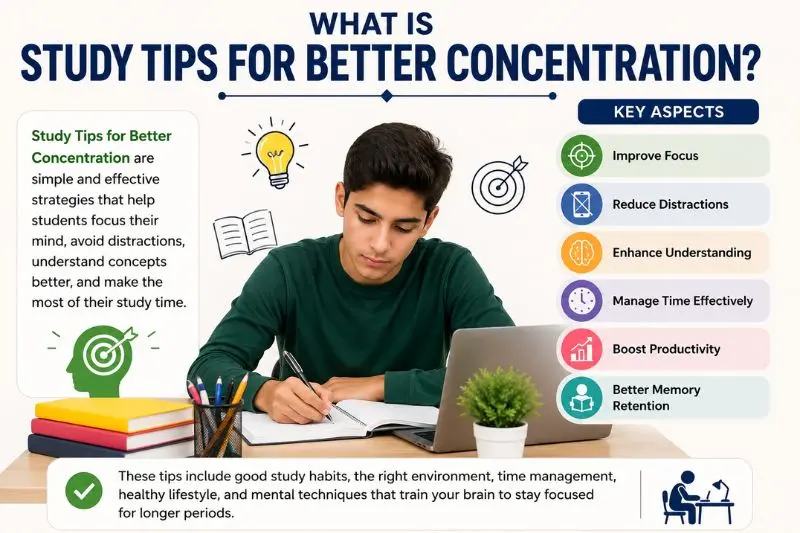
Study tips for better concentration are techniques, habits, and strategies designed to help students focus more effectively during study sessions.
These methods help reduce distractions, improve mental clarity, and increase productivity. They involve creating a suitable study environment, managing time wisely, maintaining physical health, and using proven learning techniques.
Concentration allows your brain to process information more efficiently. Instead of repeatedly reading the same material, you understand concepts faster and remember them for longer periods.
Students who understand how to improve concentration while studying often achieve better academic results because they use their study time more effectively.
Why is Study Tips for Better Concentration Important?
Concentration plays a major role in academic success. Without focus, studying becomes inefficient and frustrating.
Here are several reasons why concentration matters:
- Improves learning speed
- Enhances memory retention
- Reduces study time
- Increases productivity
- Improves academic performance
- Builds confidence
- Reduces stress before exams
- Helps manage time effectively
When you can focus deeply on a task, your brain absorbs information more efficiently. This means you spend less time reviewing material and more time understanding it.
Strong concentration skills are also useful beyond academics. They help improve problem-solving abilities, decision-making, and workplace performance later in life.
Detailed Step-by-Step Guide
Step 1: Create a Dedicated Study Space
Your environment has a powerful influence on concentration.
Choose a quiet location where interruptions are minimal. Keep your desk organized and remove unnecessary items that may distract you.
A clean study area helps your brain associate that space with learning and focus.
Step 2: Set Clear Goals Before Studying
Never start studying without a purpose.
Before each session, define specific objectives such as:
- Read one chapter
- Complete twenty practice questions
- Review lecture notes
- Write an assignment outline
Clear goals give direction to your study session and help maintain motivation.
Step 3: Follow a Study Schedule
A regular study routine trains your brain to focus during specific times.
Try studying at the same time each day. Consistency creates a habit, making concentration easier over time.
Identify your most productive hours and schedule important subjects during those periods.
Step 4: Eliminate Digital Distractions
One notification can completely break your concentration.
To stay focused:
- Turn off phone notifications
- Place your phone out of reach
- Close unnecessary browser tabs
- Log out of social media
- Use website blockers if necessary
Reducing distractions is one of the most effective concentration tips for students.
Step 5: Use the Pomodoro Technique
The Pomodoro Technique is a simple but effective time-management strategy.
Follow this process:
- Study for 25 minutes
- Take a 5-minute break
- Repeat four times
- Take a longer break of 15–30 minutes
This method prevents mental fatigue and helps maintain focus throughout the day.
Step 6: Break Large Tasks into Smaller Tasks
Large assignments often feel overwhelming.
Instead of thinking about completing an entire project, divide it into smaller sections.
For example:
- Research the topic
- Create an outline
- Write the introduction
- Complete one section at a time
Small achievements create momentum and improve motivation.
Step 7: Practice Active Learning
Passive reading is often ineffective.
Instead, engage actively with the material by:
- Taking notes
- Summarizing information
- Creating flashcards
- Teaching concepts to others
- Asking questions
Active learning keeps your brain engaged and improves concentration.
Step 8: Get Enough Sleep
Sleep is essential for memory and focus.
Students who stay awake late often struggle to concentrate the next day.
Aim for:
- 7–9 hours of sleep each night
- Consistent sleep schedules
- Limited screen time before bed
Quality sleep significantly improves learning performance.
Step 9: Stay Physically Active
Exercise improves blood circulation and supports brain function.
You do not need intense workouts.
Simple activities such as:
- Walking
- Cycling
- Stretching
- Light jogging
can improve concentration and mental energy.
Step 10: Eat Brain-Friendly Foods
Nutrition directly affects cognitive performance.
Healthy foods that support concentration include:
- Fruits
- Vegetables
- Nuts
- Eggs
- Fish
- Whole grains
Avoid excessive sugar and processed snacks because they can cause energy crashes.
Step 11: Stay Hydrated
Even mild dehydration can reduce focus and mental performance.
Keep a water bottle nearby and drink water regularly throughout the day.
Many students overlook this simple habit despite its importance.
Step 12: Manage Stress Effectively
Stress can severely impact concentration.
Helpful stress-management techniques include:
- Deep breathing exercises
- Meditation
- Physical activity
- Journaling
- Taking regular breaks
A calm mind is more capable of maintaining attention.
Benefits of Study Tips for Better Concentration
Using effective concentration strategies provides many advantages:
Better academic performance
- Faster learning
- Improved memory retention
- Reduced procrastination
- Greater productivity
- Increased confidence
- Better time management
- Less exam anxiety
- Stronger self-discipline
- Improved problem-solving skills
- More efficient study sessions
- Higher motivation levels
Students who consistently apply these techniques often notice improvements within a few weeks.
Disadvantages / Risks
Although concentration techniques are helpful, there are some potential challenges.
- Results may take time to appear
- Some methods require consistent practice
- Strict schedules may feel restrictive
- Excessive focus without breaks can cause burnout
- Trying too many techniques at once can become overwhelming
- Unrealistic expectations may cause frustration
These risks can usually be avoided by maintaining balance and being patient with the learning process.
Common Mistakes to Avoid
- Many students unknowingly damage their concentration through poor habits.
- Multitasking
- Trying to study while texting, watching videos, or browsing social media reduces learning efficiency.
- Focus on one task at a time.
- Studying Without a Plan
- Random studying often leads to poor results.
- Always create a study plan before beginning.
- Ignoring Breaks
- Long study sessions without breaks can reduce concentration and increase fatigue.
- Short breaks help maintain mental performance.
- Poor Sleep Habits
- Many students sacrifice sleep to study more.
- Unfortunately, lack of sleep often reduces learning effectiveness.
- Passive Reading
- Reading the same material repeatedly without interaction is inefficient.
- Use active learning techniques instead.
- Unrealistic Goals
- Setting impossible targets can damage motivation.
- Focus on achievable goals and gradual improvement.
FAQs
How can I concentrate while studying for long hours?
Break study sessions into smaller periods using techniques such as the Pomodoro Method. Take short breaks and stay hydrated to maintain focus.
Why do I get distracted so easily?
Common causes include lack of sleep, stress, digital distractions, poor study environments, and insufficient motivation.
What is the best method to improve concentration?
There is no single best method. Most students benefit from combining active learning, proper sleep, regular exercise, and distraction-free study sessions.
Can music improve concentration?
It depends on the individual. Some students focus better with instrumental music, while others perform best in complete silence.
Expert Tips & Bonus Points
Students who excel academically often follow a few additional strategies.
Study Difficult Subjects First
- Your mental energy is usually highest at the beginning of a study session.
- Use this time for challenging topics.
- Track Your Progress
- Maintain a study journal or planner.
- Recording achievements helps maintain motivation and identify improvement areas.
- Review Material Regularly
- Instead of cramming before exams, review information frequently.
- Regular revision improves long-term memory retention.
- Use Visualization Techniques
- Imagine yourself successfully completing assignments and performing well in exams.
- Positive visualization can strengthen motivation and focus.
- Learn Your Peak Productivity Hours
- Some students focus better in the morning, while others perform best at night.
- Identify your peak hours and schedule important tasks accordingly.
- Focus on Consistency
- Small daily improvements often produce better results than occasional intense study sessions.
- Consistency is one of the most powerful tools for long-term success.
Conclusion
Developing strong concentration skills is one of the most valuable investments a student can make. Effective study tips for better concentration help transform ordinary study sessions into productive learning experiences. By improving focus, students can understand concepts more quickly, retain information longer, and perform better in exams.
Many learners wonder how to concentrate while studying because distractions have become a normal part of modern life. Phones, social media, stress, and poor study habits often make focusing difficult. Fortunately, concentration is a skill that can be developed through consistent practice and healthy routines.
The strategies discussed in this guide provide practical ways to strengthen attention and improve academic performance. From creating a dedicated study space to using active learning methods and maintaining proper sleep habits, every small improvement contributes to better focus.
Understanding how to improve concentration while studying requires patience and commitment. Results may not appear immediately, but steady effort leads to lasting progress. The most successful students are not always the smartest. They are often the ones who can maintain focus and use their study time effectively.
By applying these concentration tips for students, you can build stronger learning habits, reduce stress, and achieve your educational goals more efficiently. Start with one or two strategies today, remain consistent, and gradually create a study routine that supports long-term success. Better concentration leads to better learning, and better learning creates greater opportunities for the future.
