


Introduction
Effective note-taking methods for students are among the most valuable skills for academic success. Whether you are attending lectures, participating in online classes, reading textbooks, or preparing for exams, the way you take notes can significantly influence how much information you understand and remember.
Many students spend hours studying but still struggle to achieve the results they want. In many cases, the issue is not a lack of effort but an ineffective approach to capturing and organizing information. Good notes serve as a personal learning resource that simplifies revision, improves understanding, and helps students retain knowledge for longer periods.
Taking notes is not simply writing down everything a teacher says. Instead, it involves actively listening, identifying key concepts, summarizing information, and organizing ideas in a meaningful way. When students develop strong note-taking habits, they become more engaged in the learning process and can review material more efficiently.
In today’s educational environment, students can choose from traditional handwritten notes, digital note-taking tools, mind maps, charts, and structured systems such as the Cornell Method. Each approach has unique benefits depending on the subject and learning style.
This guide explores effective note-taking methods for students, explains their importance, provides a step-by-step approach, highlights advantages and disadvantages, answers common questions, and shares expert tips to help learners maximize their academic performance.
What Is Effective Note-Taking Methods for Students?
Effective note-taking methods for students refer to organized strategies used to record, summarize, and structure information during learning activities. These methods help students capture the most important ideas while filtering out unnecessary details.
Rather than copying information word for word, effective note-taking focuses on understanding concepts and recording them in a clear and concise format. The goal is to create notes that are easy to review and useful during exam preparation.
haracteristics of effective notes include:
- Clear organization
- Logical structure
- Concise wording
- Accurate information
- Easy readability
- Relevant examples
- Key points highlighted
Good note-taking transforms passive listening into active learning, helping students process information more effect
Why Is Effective Note-Taking Methods for Students Important?
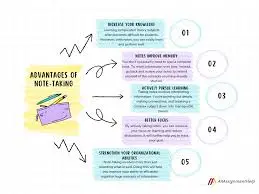
Strong note-taking skills provide several educational benefits. Students who consistently take organized notes often perform better academically because they have access to a reliable study resource.
Key reasons why note-taking is important include:
- Improves focus during lessons
- Encourages active learning
- Enhances memory retention
- Makes revision easier
- Supports critical thinking
- Helps identify important concepts
- Reduces study stress before exams
- Improves classroom engagement
For example, a student who summarizes a science lecture using headings and diagrams is more likely to understand and remember the material than a student who simply listens without taking notes.
Detailed Step-by-Step Guide
Step 1: Prepare Before Class
Effective note-taking begins before the lesson starts.
Preparation strategies include:
- Review previous notes.
- Read assigned chapters.
- Identify lesson objectives.
- Organize study materials.
- Bring necessary supplies.
Preparation creates a foundation for understanding new information.

Step 2: Choose the Right Note-Taking Method
Different situations require different approaches.
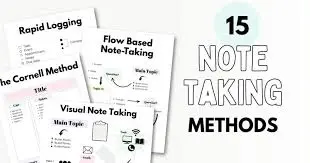
The Cornell Method
The Cornell Method divides a page into three sections:
- Notes section
- Cue column
- Summary area
Students record information in the main section, write keywords in the cue column, and summarize the lesson at the bottom.
Advantages:
- Highly organized
- Encourages review
- Excellent for exam preparation
- The Outline Method
This method uses headings and subheadings.
Example:
I. Photosynthesis
A. Definition
B. Process
C. Importance
Advantages:
- Logical structure
- Easy to follow
- Ideal for lectures
- The Mapping Method
The Mapping Method uses diagrams to connect ideas visually.
Advantages:
- Great for visual learners
- Shows relationships between concepts
- Useful for brainstorming
- The Charting Method
Information is organized into rows and columns.
Advantages:
- Excellent for comparisons
- Useful in science and history subjects
- Easy to review
- The Sentence Method
Students write each idea as a separate sentence.
Advantages:
- Fast and simple
- Useful during rapid lectures
- Minimal preparation required
- Step 3: Focus on Key Information
Avoid writing every word.
Instead, concentrate on:
- Definitions
- Concepts
- Examples
- Dates
- Statistics
- Instructor emphasis
This keeps notes concise and meaningful.
Step 4: Use Abbreviations and Symbols
Common examples include:
- w/ = with
- b/c = because
- ↑ = increase
- ↓ = decrease
- → = leads to
These shortcuts save time and improve efficiency.
Step 5: Organize Notes Clearly
Structure plays a major role in usability.
Use:
- Headings
- Bullet points
- Numbering
- Indentation
- Color coding
Well-organized notes make information easier to locate and understand.
Step 6: Review Notes Soon After Class
Reviewing notes within 24 hours significantly improves retention.
During review:
- Add missing details
- Clarify unclear sections
- Highlight key points
- Create summaries
This process strengthens learning.
Step 7: Revise Regularly
Long-term retention requires repetition.
Useful revision techniques include:
- Flashcards
- Practice questions
- Mind maps
- Self-testing
- Group discussions
Consistent review converts short-term memory into long-term knowledge.
Benefits of Effective Note-Taking Methods for Students
Effective note-taking offers numerous benefits.
- Improves concentration during lectures
- Increases information retention
- Enhances understanding of complex topics
- Encourages active participation
- Makes revision more efficient
- Reduces exam anxiety
- Strengthens organizational skills
- Supports critical thinking
- Helps identify knowledge gaps
- Improves academic performance
- Saves time during exam preparation
- Builds independent learning skills
Students who take effective notes often feel more confident and prepared throughout the academic year.
Disadvantages / Risks
While note-taking is highly beneficial, certain challenges may arise.
- Writing too much information
- Missing important points while copying notes
- Becoming distracted by formatting
- Spending excessive time rewriting notes
- Using unclear abbreviations
- Creating disorganized note structures
- Relying on notes without understanding concepts
Recognizing these risks helps students improve their approach.
Common Mistakes to Avoid
Copying Information Word for Word
Writing every sentence can reduce comprehension because students focus on transcription rather than understanding.
Failing to Organize Notes
Randomly written notes become difficult to review later.
Not Reviewing Notes
Without regular review, information is quickly forgotten.
Ignoring Key Concepts
Focusing on minor details while missing major ideas reduces effectiveness.
Overusing Highlighters
Highlighting everything defeats the purpose of emphasis.
Choosing the Wrong Method
Different subjects require different note-taking strategies.
Not Asking Questions
Questions reveal gaps in understanding and encourage deeper learning.
Waiting Too Long to Review
Delayed review reduces retention and makes revision more difficult.
FAQs
What is the best note-taking method for students?
The best method depends on individual learning preferences and subject requirements. Many educators recommend the Cornell Method because it promotes organization, active learning, and efficient revision.
Are handwritten notes better than digital notes?
Both have advantages. Handwritten notes often improve memory retention because they require greater mental processing. Digital notes offer convenience, searchability, and easy organization
How often should students review their notes?
Students should review notes within 24 hours of taking them and continue reviewing regularly throughout the semester.
Can note-taking improve grades?
Yes. Effective note-taking methods for students improve comprehension, retention, and exam preparation, which often leads to better academic performance
How can students take notes faster?
Students can use abbreviations, symbols, keywords, and structured note-taking systems to record information more efficiently.
What should students include in their notes?
Notes should contain key concepts, definitions, examples, formulas, dates, explanations, and important observations from lectures or readings.
Is highlighting enough for studying?
No. Highlighting can support learning, but students should also summarize information, answer questions, and actively review concepts.
Which note-taking method works best for science subjects?
The Cornell Method and Charting Method are particularly useful for science subjects because they help organize complex information and comparisons.
Expert Tips & Bonus Points
Students can significantly improve their note-taking skills by following expert recommendations.
Listen First, Write Second
Use Your Own Words
Rewriting concepts in your own language improves understanding and retention.
Create Visual Elements
Understand the idea before recording it. This helps create meaningful notes rather than random statements.
Diagrams, charts, and mind maps help simplify complex topics.
Keep Notes Consistent
Use a similar format across subjects to make studying easier.
Summarize Each Lesson
Write a brief summary after every class to reinforce learning.
Review Weekly
Weekly reviews prevent information loss and reduce exam stress.
Combine Methods
Do not hesitate to mix note-taking techniques when appropriate.
Focus on Understanding
Remember that note-taking is a learning tool, not a copying exercise.
Maintain a Dedicated Notebook
Keeping notes organized in one location makes them easier to manage and review.
Develop a Personal System
Experiment with different methods and choose the approach that best matches your learning style.
Conclusion
Effective note-taking methods for students are essential tools for academic achievement. They help learners capture important information, organize ideas, improve memory retention, and prepare more effectively for exams. Instead of passively listening or reading, students become active participants in the learning process when they take meaningful notes.
By preparing before class, selecting the appropriate note-taking method, focusing on key concepts, organizing information clearly, and reviewing notes regularly, students can significantly enhance their learning experience. Whether using the Cornell Method, Outline Method, Mapping Method, Charting Method, or Sentence Method, consistency and active engagement remain the keys to success.
Students should also avoid common mistakes such as copying information word for word, neglecting review sessions, and creating disorganized notes. Effective note-taking is not about producing pages of text; it is about creating a valuable learning resource that supports understanding and long-term retention.
Ultimately, developing strong note-taking habits can improve academic performance, increase confidence, reduce study stress, and foster lifelong learning skills. With regular practice and the right strategies, any student can master the art of note-taking and achieve greater success in education.
