


Introduction
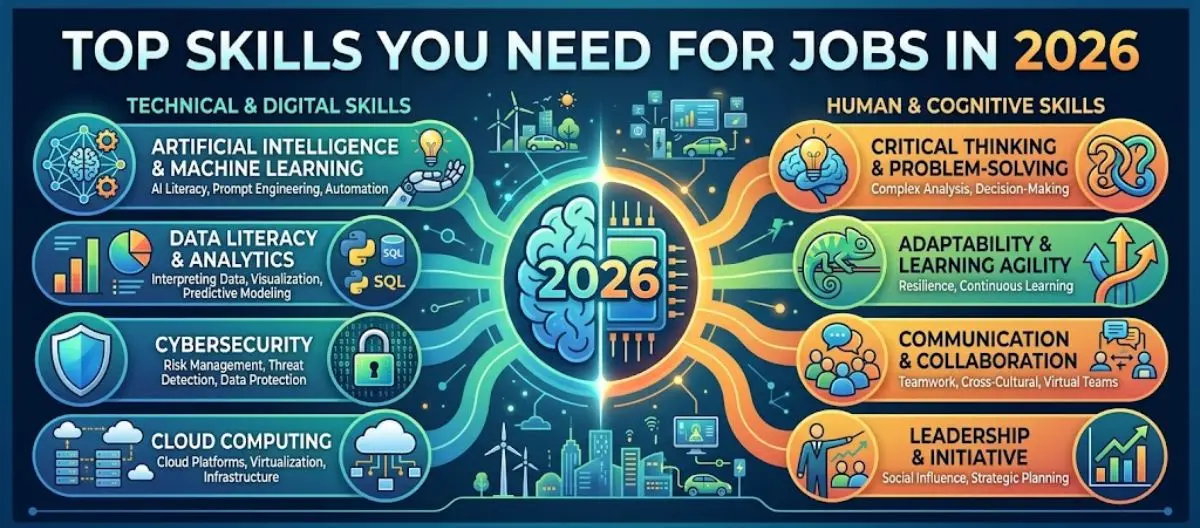
The workplace is evolving faster than ever before. New technologies, changing business models, and shifting customer expectations are transforming how companies hire and manage talent. As a result, professionals who want to stay competitive must continuously learn and adapt. Understanding the Top Skills You Need for Jobs in 2026 can help you prepare for future opportunities and build a career that remains relevant in the years ahead.
Employers are no longer focused only on technical expertise. They are also looking for individuals who can solve problems, communicate effectively, work with diverse teams, and adapt to change. Whether you are a student, a recent graduate, a job seeker, or an experienced professional, developing the right combination of technical and soft skills can significantly improve your career prospects.
The good news is that most future-ready skills can be learned and improved through consistent practice, online courses, hands-on projects, and real-world experience. You do not need to become an expert overnight. Instead, focusing on gradual improvement can help you stay ahead of industry trends.
In this article, we will explore the Top Skills You Need for Jobs in 2026, why they matter, how to develop them step by step, their benefits and risks, common mistakes to avoid, frequently asked questions, and expert tips that can help you succeed in the modern job market.
What is Top Skills You Need for Jobs in 2026?
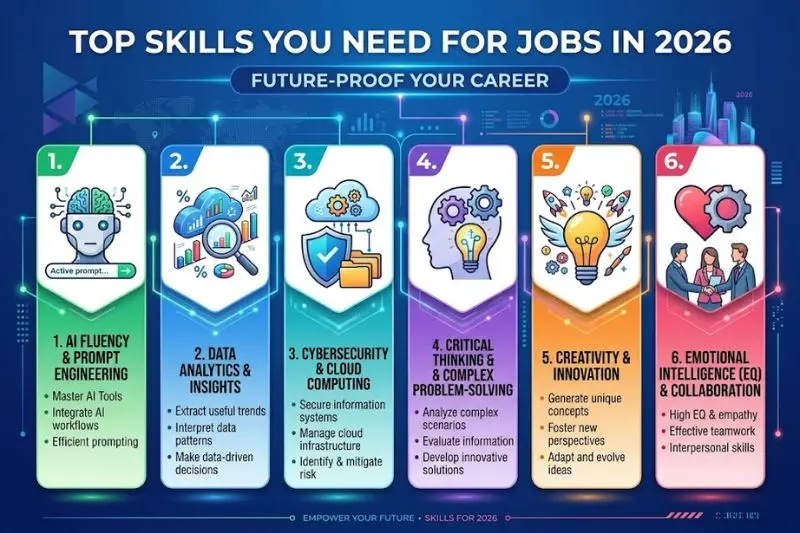
The phrase Top Skills You Need for Jobs in 2026 refers to the most valuable abilities employers are expected to seek in candidates across industries. These skills include both technical competencies and human-centered capabilities that support productivity, innovation, and collaboration.
Unlike traditional job qualifications that focused heavily on degrees and experience, modern employers increasingly prioritize practical skills. The ability to learn quickly, adapt to new technologies, analyze information, and work effectively with others has become essential.
These skills are relevant across multiple industries, including technology, healthcare, finance, education, marketing, manufacturing, and customer service. While specific job requirements vary, many core skills remain valuable regardless of profession.
Why is Top Skills You Need for Jobs in 2026 Important?
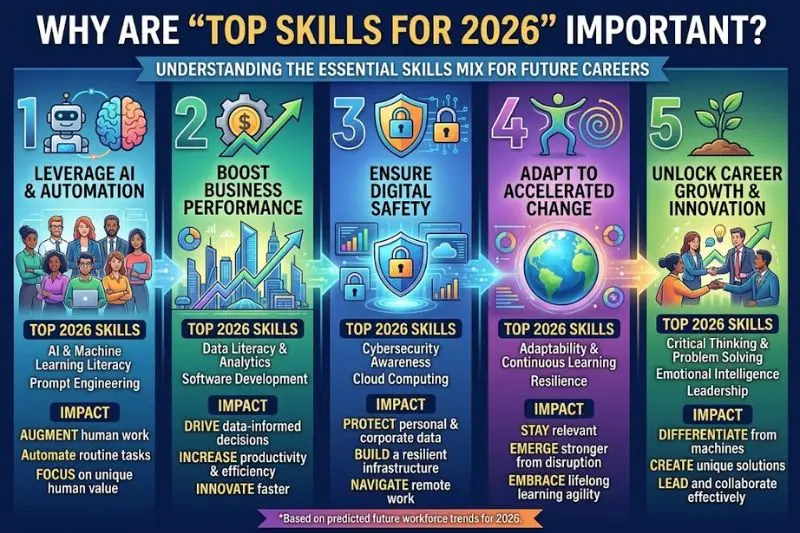
Understanding the Top Skills You Need for Jobs in 2026 is important because the job market is becoming increasingly competitive. Automation and digital transformation are changing the nature of work, making some roles obsolete while creating entirely new career opportunities.
Here are several reasons why these skills matter:
- They increase employability.
- They improve career flexibility.
- They support higher earning potential.
- They help professionals adapt to change.
- They create opportunities for advancement.
- They enhance workplace productivity.
- They strengthen professional confidence.
Employers want workers who can contribute value immediately while also adapting to future business needs. Developing future-focused skills can help you remain relevant regardless of industry changes.
Detailed Step-by-Step Guide
Step 1: Develop Digital Literacy
Digital literacy is no longer optional. Almost every profession now relies on digital tools and online platforms.
Key areas include:
- Basic computer skills
- Cloud-based applications
- Online collaboration tools
- Digital communication
- Data management
For example, understanding spreadsheets, project management software, and virtual meeting platforms can improve your workplace effectiveness.
Step 2: Build Data Analysis Skills
Data-driven decision-making is becoming standard across industries.
Focus on learning:
- Data interpretation
- Spreadsheet analysis
- Data visualization
- Reporting techniques
- Basic analytics tools
Even non-technical professionals benefit from understanding how to analyze information and identify trends.
Step 3: Improve Critical Thinking
Critical thinking helps professionals evaluate situations objectively and make informed decisions.
Ways to improve critical thinking include:
- Asking thoughtful questions
- Evaluating evidence
- Considering alternative solutions
- Identifying assumptions
- Analyzing outcomes
Organizations highly value employees who can solve complex problems independently.
Step 4: Strengthen Communication Skills
Communication remains one of the most important professional abilities.
Important communication skills include:
- Writing clearly
- Active listening
- Public speaking
- Presentation skills
- Professional email communication
Strong communicators often build better relationships with colleagues, clients, and managers.
Step 5: Learn Adaptability and Flexibility
Change is constant in modern workplaces.
Adaptability involves:
- Learning new tools quickly
- Adjusting to workplace changes
- Accepting feedback
- Managing uncertainty
- Staying open to innovation
Employees who embrace change often become valuable contributors during organizational transitions.
Step 6: Develop Emotional Intelligence
Emotional intelligence involves understanding and managing emotions effectively.
Core components include:
- Self-awareness
- Self-regulation
- Empathy
- Social skills
- Relationship management
Professionals with strong emotional intelligence often excel in leadership and teamwork roles.
Step 7: Master Collaboration and Teamwork
Few jobs operate in isolation.
Effective teamwork requires:
- Respect for others
- Shared responsibility
- Constructive feedback
- Conflict resolution
- Cooperation
Collaborative employees contribute to healthier and more productive work environments.
Step 8: Learn Project Management Basics
Project management skills help professionals organize tasks and achieve goals efficiently.
Focus on:
- Planning
- Scheduling
- Prioritization
- Resource management
- Progress tracking
These abilities are valuable across industries and career levels.
Step 9: Improve Creativity and Innovation
Creativity is not limited to artistic professions.
Creative professionals:
- Generate new ideas
- Solve problems differently
- Improve processes
- Identify opportunities
- Encourage innovation
Businesses increasingly value employees who can contribute fresh perspectives.
Step 10: Develop Leadership Skills
Leadership is important even for individuals who are not managers.
Leadership skills include:
- Decision-making
- Accountability
- Motivation
- Strategic thinking
- Influence
Strong leadership abilities can accelerate career growth and increase workplace impact.
Step 11: Understand Cybersecurity Awareness
As digital threats continue to grow, cybersecurity awareness is becoming a critical workplace skill.
Learn how to:
- Recognize phishing attempts
- Protect passwords
- Secure sensitive information
- Follow company policies
- Practice safe online behavior
Basic cybersecurity knowledge helps protect both personal and organizational data.
Step 12: Commit to Lifelong Learning
One of the most important elements of the Top Skills You Need for Jobs in 2026 is the ability to learn continuously.
Ways to support lifelong learning:
- Read industry publications
- Take online courses
- Attend workshops
- Earn certifications
- Participate in professional communities
Continuous learning ensures long-term career resilience.
Benefits of Top Skills You Need for Jobs in 2026
Developing future-ready skills offers many advantages:
- Increased job opportunities
- Better career stability
- Higher earning potential
- Greater professional confidence
- Improved productivity
- Enhanced problem-solving ability
- Stronger workplace relationships
- Increased adaptability
- More leadership opportunities
- Better long-term career growth
Professionals who invest in skill development are often better prepared to navigate changing market demands.
Disadvantages / Risks
Although learning new skills is beneficial, there are some challenges to consider:
- Learning requires time and effort.
- Some training programs can be expensive.
- Rapid technology changes may require constant updates.
- Skill overload can cause confusion.
- Balancing learning with work responsibilities can be difficult.
- Not every skill is equally relevant to every profession.
- Unrealistic expectations may lead to frustration.
The key is focusing on skills that align with your career goals rather than trying to learn everything at once.
Common Mistakes to Avoid
Many people struggle to develop future-ready skills because they make avoidable mistakes.
Ignoring Soft Skills
Technical knowledge alone is often insufficient. Communication, teamwork, and emotional intelligence remain essential.
Waiting Too Long to Learn
Some professionals delay learning until their industry changes dramatically. Starting early provides a significant advantage.
Focusing Only on Certifications
Certificates can be valuable, but practical experience is equally important.
Avoiding New Technology
Resistance to new tools can limit career growth and reduce employability.
Learning Without a Plan
Random learning may produce limited results. Create a structured development roadmap.
Neglecting Networking
Professional relationships often create opportunities for mentorship, collaboration, and career advancement.
Giving Up Too Quickly
Skill development takes time. Consistency matters more than rapid progress.
FAQs
What are the most important skills for jobs in 2026?
Start by evaluating your skills, interests, personality traits, and values. Research different professions and gain practical experience whenever possible. The right career typically aligns with both your strengths and interests.
Can I choose a career even if I have multiple interests?
Yes. Many people have diverse interests. Focus on identifying common themes and transferable skills. You may also combine interests through interdisciplinary careers.
Is it okay to change careers later in life?
Absolutely. Career changes are increasingly common. Many professionals successfully transition into new industries after gaining additional skills and experience.
Should I prioritize passion or salary?
Ideally, choose a career that balances both. A strong interest can increase motivation, while reasonable earning potential supports financial stability.
How important are career assessments?
Career assessments can be helpful tools for self-discovery. However, they should complement research and real-world experiences rather than replace them.
What if I do not know my strengths?
Ask teachers, colleagues, mentors, friends, and family members for feedback. Review past achievements and identify tasks you perform consistently well.
How long does career planning take?
The process varies from person to person. Some individuals gain clarity quickly, while others need months of exploration and reflection. Taking time to make an informed decision is often worthwhile.
Can hobbies become careers?
Yes. Many people transform hobbies such as writing, photography, coding, fitness, or design into successful careers. The key is developing professional-level skills and understanding market demand.
Expert Tips & Bonus Points
If you want to stay ahead in the future job market, consider the following expert recommendations:
Create a Personal Learning Plan
Identify the skills most relevant to your career goals and develop a structured learning roadmap.
Practice Daily
Consistency matters more than intensity.
Even 30 minutes of focused learning each day can produce significant results over time.
Build a Portfolio
Showcase your abilities through projects, case studies, certifications, and achievements.
Follow Industry Trends
Stay informed about technological developments and market changes within your field.
Develop a Growth Mindset
View challenges as opportunities to learn rather than obstacles to avoid.
Invest in Networking
Attend industry events, webinars, workshops, and professional communities.
Focus on Lifelong Learning
The most successful professionals understand that learning never truly ends.
Conclusion
The future of work will reward individuals who embrace continuous learning and develop a balanced combination of technical expertise and human-centered skills. Understanding the Top Skills You Need for Jobs in 2026 can help you prepare for emerging opportunities while protecting your long-term career prospects.
As industries evolve, employers will increasingly prioritize professionals who can adapt quickly, solve problems creatively, communicate effectively, and leverage technology responsibly. Skills such as digital literacy, data analysis, leadership, emotional intelligence, adaptability, and project management will continue growing in importance across multiple sectors.
The journey toward professional success does not require mastering every skill immediately. Instead, focus on identifying the abilities most relevant to your goals and build them consistently over time. Small daily improvements can lead to remarkable long-term results.
Remember that the most valuable employees are not necessarily those who know everything, but those who remain curious, flexible, and committed to growth. By investing in your development today, you can position yourself for success in tomorrow’s competitive job market.
Whether you are a student entering the workforce, a professional seeking advancement, or someone considering a career change, now is the perfect time to start building the skills that will define success in 2026 and beyond.
