



Introduction
A study timetable for students at home is one of the most effective tools for improving learning, managing time, and achieving academic goals. Many students struggle to balance schoolwork, homework, family responsibilities, and personal activities. Without a proper plan, it becomes easy to waste time, miss deadlines, and feel stressed before exams.
Creating a structured timetable helps students organize their day and stay focused on important tasks. Instead of wondering what to study next, they can follow a clear schedule that guides their learning process. This not only saves time but also improves productivity and confidence.
Studying at home offers flexibility, but it can also bring distractions. Television, social media, mobile phones, and household activities often interrupt concentration. A well-planned study timetable reduces these distractions by assigning specific times for learning and breaks.
Students of all ages can benefit from a study timetable. Whether preparing for school tests, board exams, college assessments, or competitive examinations, a proper schedule helps maintain consistency. Good study habits developed today can support success in future academic and professional life.
In this guide, you will learn what a study timetable for students at home is, why it matters, how to create one step by step, its benefits, common mistakes to avoid, and expert tips for better results. By following these practical strategies, students can make learning more organized, productive, and enjoyable.
What is Study Timetable for Students at Home?

A study timetable for students at home is a planned schedule that organizes study sessions, breaks, revision periods, and daily activities. It acts as a roadmap that helps students manage their time efficiently.
Instead of studying randomly, students follow a structured plan that tells them what subject to study, when to study it, and how much time to spend on each topic. This approach creates discipline and prevents procrastination.
A timetable can be simple or detailed depending on individual needs. Some students prefer hourly schedules, while others use daily or weekly plans. The goal is to create a routine that supports learning and makes study sessions more effective.
Why is Study Timetable for Students at Home Important?

A study timetable is important because it helps students use their time wisely. Without a schedule, students may spend too much time on easy subjects and ignore difficult topics.
Reasons why it matters:
- Improves time management
- Reduces last-minute stress
- Increases productivity
- Encourages consistency
- Helps complete assignments on time
- Supports better exam preparation
- Creates healthy study habits
- Improves concentration and focus
Students who follow a timetable often feel more confident because they know they are making steady progress toward their goals.
Detailed Step-by-Step Guide
Step 1: Set Clear Academic Goals
Before creating a timetable, identify your objectives.
Examples include:
- Improve mathematics scores
- Complete homework daily
- Prepare for upcoming exams
- Finish a specific chapter each week
Clear goals help determine how much study time is required.
Step 2: Analyze Your Daily Routine
Look at your current schedule and identify available study hours.
Consider:
- School timings
- Meals
- Sleep
- Family responsibilities
- Exercise
- Personal activities
Understanding your daily routine helps create a realistic timetable.
Step 3: List All Subjects
Write down every subject you need to study.
Examples:
- Mathematics
- Science
- English
- Social Studies
- Computer Science
This helps ensure every subject receives attention.
Step 4: Prioritize Important Subjects
Not all subjects require equal time.
Focus more on:
- Difficult topics
- Upcoming exams
- Weak subjects
- High-weightage chapters
Prioritizing helps improve overall performance.
Step 5: Divide Study Sessions
Long study sessions can reduce concentration.
Instead:
- Study for 25–50 minutes
- Take short breaks
- Return with fresh focus
Short, focused sessions often produce better results than marathon study hours.
Step 6: Include Revision Time
Revision is essential for retaining information.
Schedule:
- Daily revision
- Weekly revision
- Monthly revision
Frequent review improves long-term memory.
Step 7: Add Breaks
Breaks help prevent mental fatigue.
Good break activities include:
- Walking
- Stretching
- Drinking water
- Relaxing briefly
Avoid spending breaks scrolling through social media.
Step 8: Maintain Flexibility
Unexpected events may disrupt your schedule.
Leave some buffer time for:
- Extra assignments
- Family events
- Difficult topics
- Missed sessions
A flexible timetable is easier to follow consistently.
Step 9: Track Progress
Review your timetable regularly.
Ask yourself:
- Did I complete planned tasks?
- Which subjects need more time?
- What improvements can I make?
Tracking progress helps refine your study routine.
Step 10: Stay Consistent
The most effective timetable is one you follow regularly.
Consistency builds discipline and leads to better academic outcomes over time.
Benefits of Study Timetable for Students at Home
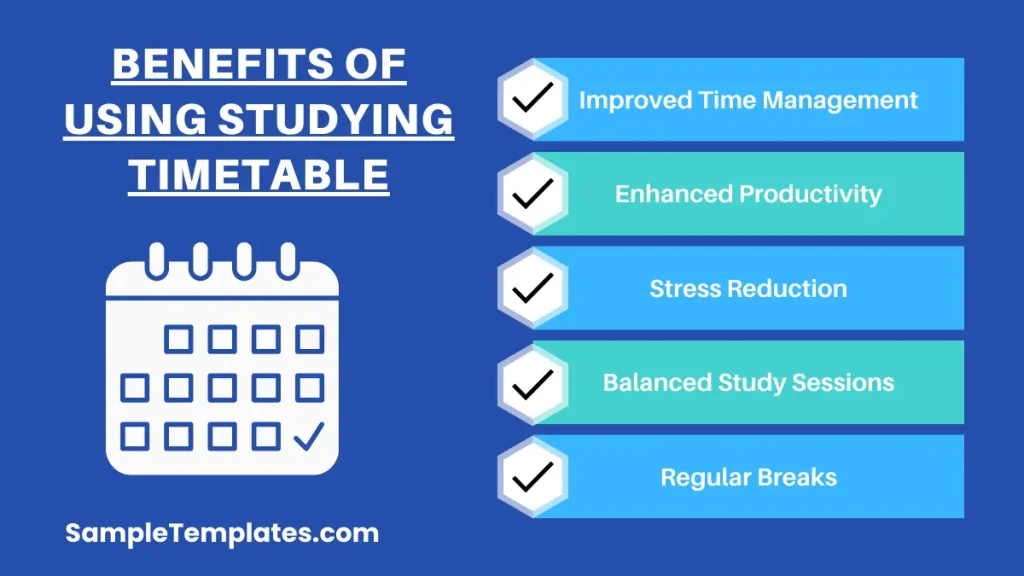
A well-designed timetable offers many advantages:
- Better time management
- Improved productivity
- Stronger focus during study sessions
- Reduced academic stress
- Better exam preparation
- Increased self-discipline
- Improved memory retention
- Balanced study and personal life
- Greater confidence
- Higher academic performance
- More organized learning process
- Better goal achievement
Students who follow a timetable consistently often notice significant improvements in their study habits.
Disadvantages / Risks
Although study timetables are useful, problems can occur if they are not designed properly.
Potential risks include:
- Overloading the schedule
- Unrealistic expectations
- Lack of flexibility
- Ignoring personal learning preferences
- Excessive focus on planning instead of studying
- Burnout due to insufficient breaks
- Frustration when goals are too difficult
Students should create balanced schedules that suit their individual needs.
Common Mistakes to Avoid
Creating an Unrealistic Schedule
Many students plan more tasks than they can complete. A realistic timetable is easier to maintain.
Ignoring Difficult Subjects
Avoiding challenging topics creates bigger problems later. Give extra time to weaker areas.
Studying Without Breaks
Continuous studying often reduces concentration. Regular breaks support better learning.
Not Revising Regularly
Revision strengthens memory and improves exam performance. Do not wait until exams to review material.
Following Someone Else’s Timetable
Every student has different strengths, weaknesses, and responsibilities. Customize your schedule according to your own needs.
Lack of Sleep
Late-night studying may reduce focus and memory. Adequate sleep is essential for effective learning.
Excessive Multitasking
Trying to study while checking messages or watching videos reduces productivity. Focus on one task at a time
FAQs
What is the best study timetable for students at home?
The best timetable is one that matches a student’s goals, subjects, and available study time. It should include study sessions, revision periods, breaks, and sufficient sleep.
How many hours should students study at home?
The ideal number depends on age and academic level. Many students benefit from two to five focused study hours daily, depending on their workload and goals.
Should difficult subjects be studied first?
Many students find it helpful to study difficult subjects when energy and concentration levels are highest. This often leads to better understanding and retention.
How often should students revise?
Regular revision is important. Daily review of recent lessons and weekly revision of older topics can significantly improve memory retention.
Can a study timetable reduce exam stress?
Yes. A timetable spreads study tasks over time, reducing last-minute pressure and helping students feel more prepared.
Expert Tips & Bonus Points
- Study difficult subjects during peak concentration hours.
- Use active recall instead of passive reading.
- Practice with sample questions regularly.
- Keep study materials organized.
- Limit unnecessary screen time.
- Use visual learning tools such as charts and mind maps.
- Reward yourself after completing important tasks.
- Track weekly progress in a notebook.
- Set small daily goals.
- Maintain a positive attitude toward learning.
Another useful strategy is the Pomodoro Technique. Study for twenty-five minutes, take a five-minute break, and repeat the cycle. This method helps maintain concentration and reduces mental fatigue.
Students should also remember that consistency beats intensity. Studying a little every day is often more effective than studying for long hours only occasionally.
Conclusion
A study timetable for students at home is a practical and powerful tool for academic success. It helps students organize their time, stay focused, and make steady progress toward their educational goals. Rather than studying randomly, learners follow a clear plan that improves productivity and reduces stress.
Creating an effective timetable does not require complicated methods. Students simply need realistic goals, balanced study sessions, regular revision, and healthy breaks. Over time, these habits build discipline, confidence, and stronger learning skills.
One of the biggest advantages of a timetable is consistency. Small daily efforts often produce better results than occasional bursts of intense studying. By following a structured schedule, students can avoid procrastination and manage their workload more effectively.
It is also important to remain flexible. Life does not always go according to plan, and adjustments may be necessary. A successful timetable is one that supports learning while allowing room for rest, hobbies, and personal responsibilities.
Whether you are preparing for school exams, college assessments, or competitive tests, a well-planned study timetable can help you achieve better results. Start with simple changes, review your progress regularly, and improve your routine over time. With patience, commitment, and smart planning, students can transform their study habits and reach their academic goals more successfully.
You have not enough Humanizer words left. Upgrade your Surfer plan.
