



introduction
Applying for a scholarship can be one of the most effective ways to reduce the financial burden of education. However, many students miss valuable opportunities because they fail to submit the correct documents or provide incomplete information. Understanding the documents required for scholarship applications is essential for creating a strong and successful application.
Scholarship providers receive thousands of applications every year. To evaluate candidates fairly, they require specific documents that verify academic performance, financial background, achievements, and personal qualifications. Missing even one important document can lead to delays or automatic rejection.
Whether you are applying for a merit-based scholarship, need-based financial aid, sports scholarship, or international study grant, preparation is the key to success. Gathering the necessary paperwork ahead of time can make the application process much smoother and less stressful.
In this comprehensive guide, you will learn about the most common documents required for scholarship applications, why they matter, how to prepare them, and the mistakes you should avoid. By following these recommendations, you can improve your chances of securing financial support for your education and future career goals.
What is Documents Required for Scholarship Applications?
The term documents required for scholarship applications refers to the collection of official papers and supporting materials that students must submit when applying for a scholarship.
These documents help scholarship committees assess whether an applicant meets eligibility requirements and deserves financial assistance. The exact requirements vary depending on the scholarship program, educational institution, and funding organization.
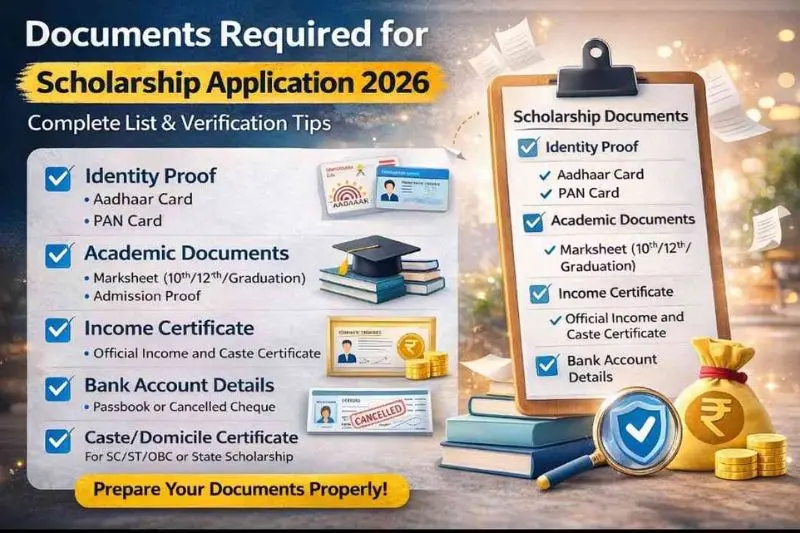
Common scholarship documents may include:
- Academic transcripts
- Identity documents
- Recommendation letters
- Personal statements
- Financial records
- Certificates of achievements
- Admission letters
- Resume or CV
Each document serves a specific purpose and provides valuable information about the applicant’s qualifications and background.
Why is Documents Required for Scholarship Applications Important?
Scholarship organizations rely on documentation to make informed decisions. Without proper evidence, it becomes difficult to evaluate an applicant fairly.
Here are several reasons why these documents are important:
- Verify academic achievements.
- Confirm student identity.
- Demonstrate financial need.
- Highlight extracurricular accomplishments.
- Showcase leadership skills.
- Provide proof of admission.
- Support claims made in the application form.
For example, a student may claim excellent academic performance. However, official transcripts are needed to verify grades and academic records.
Similarly, financial documents help scholarship providers determine whether an applicant genuinely requires financial assistance.
Detailed Step-by-Step Guide
Step 1: Prepare Academic Transcripts
Academic transcripts are among the most important documents required for scholarship applications.
These records contain information about:
- Grades
- Subjects studied
- GPA or percentage
- Academic standing
Most scholarship committees use transcripts to evaluate academic excellence.
Example:
A scholarship requiring a minimum GPA of 3.5 will review transcripts to verify eligibility.
Step 2: Gather Identification Documents
Applicants must prove their identity using official documents.
Common examples include:
- National ID card
- Passport
- Birth certificate
- Student ID card
Ensure that all information is accurate and clearly visible.
Step 3: Obtain Letters of Recommendation
Recommendation letters provide insight into a student’s character, work ethic, and abilities.
These letters are usually written by:
- Teachers
- Professors
- School principals
- Employers
- Mentors
A strong recommendation letter can significantly strengthen a scholarship application.
Step 4: Write a Personal Statement
A personal statement allows applicants to tell their story.
The document typically includes:
- Academic goals
- Career aspirations
- Personal challenges
- Reasons for applying
Scholarship committees often use personal statements to understand the applicant beyond grades and test scores.
Step 5: Prepare a Scholarship Essay
Many scholarships require a separate essay.
A scholarship essay may discuss:
- Leadership experiences
- Community service
- Educational goals
- Personal achievements
Always follow the scholarship guidelines carefully and stay within the specified word count.
Step 6: Collect Financial Documents
Need-based scholarships require evidence of financial circumstances.
Common financial documents include:
- Family income certificates
- Tax returns
- Salary slips
- Bank statements
These documents help determine financial eligibility.
Step 7: Include Proof of Admission
Many scholarship providers require proof that the applicant has been accepted into an educational institution.
Examples include:
- Admission letter
- Enrollment confirmation
- Offer letter from a university
Without proof of admission, some scholarships may not process the application.
Step 8: Prepare a Resume or CV
A resume provides a summary of your achievements and experiences.
Include:
- Educational background
- Volunteer work
- Leadership positions
- Awards and honors
- Work experience
A well-structured resume makes it easier for reviewers to assess your qualifications.
Step 9: Submit Language Proficiency Test Results
For international scholarships, language proficiency scores may be required.
Examples include:
- IELTS
- TOEFL
- PTE
- Duolingo English Test
Ensure your scores meet the scholarship’s minimum requirements.
Step 10: Organize Certificates and Awards
Certificates demonstrate accomplishments outside the classroom.
Examples include:
- Academic awards
- Sports achievements
- Debate competitions
- Volunteer service certificates
- Leadership awards
These documents help showcase a well-rounded profile.
Step 11: Verify Document Accuracy
Before submission, review every document carefully.
Check for:
- Spelling errors
- Missing signatures
- Expired documents
- Incorrect personal information
Accuracy is essential for a professional application.
Step 12: Submit Before the Deadline
Even the strongest application can be rejected if submitted late.
Create a checklist and submit all required documents well before the deadline.
Benefits of Documents Required for Scholarship Applications
Properly preparing scholarship documents offers many advantages:
- Increases the chances of scholarship approval.
- Demonstrates professionalism and responsibility.
- Helps scholarship committees evaluate applicants fairly.
- Reduces the risk of application rejection.
- Highlights academic and personal achievements.
- Supports claims made in application forms.
- Saves time during the review process.
- Creates a positive impression on evaluators.
- Improves organization and planning skills.
- Strengthens the overall application package.
Disadvantages / Risks
Although documentation is necessary, there are some challenges associated with the process:
- Gathering documents can be time-consuming.
- Some documents require official verification.
- Missing paperwork may result in rejection.
- Obtaining recommendation letters may take time.
- Translation costs may apply for international applications.
- Financial records may involve privacy concerns.
- Last-minute preparation can increase stress.
- Incorrect information can damage credibility.
Despite these challenges, proper planning can help students overcome most difficulties.
Common Mistakes to Avoid
Many scholarship applicants make avoidable mistakes that reduce their chances of success.
Submitting Incomplete Applications
Always review the scholarship checklist before submission.
Missing documents are one of the leading causes of rejection.
Ignoring Instructions
Every scholarship has unique requirements.
Read all guidelines carefully and follow them exactly.
Using Generic Personal Statements
Avoid writing vague essays that could apply to anyone.
Instead, share specific experiences and goals.
Providing Outdated Documents
Ensure all records are current and valid.
Expired documents may not be accepted.
Waiting Until the Last Minute
Starting early gives you enough time to gather, review, and improve your documents.
Failing to Proofread
Errors can make an application appear careless.
Review all materials multiple times before submission.
Using Weak Recommendation Letters
Choose recommenders who know your strengths and can provide meaningful insights.
Uploading Poor-Quality Scans
If documents are submitted online, ensure scans are clear and readable
What are the most important documents required for scholarship application?
The most commonly required documents include academic transcripts, identification documents, recommendation letters, personal statements, financial records, and proof of admission.
Do all scholarships require financial documents?
No. Merit-based scholarships may focus primarily on academic achievements, while need-based scholarships usually require financial records.
Can I apply without recommendation letters?
Some scholarships do not require recommendation letters. However, many competitive scholarships consider them an important part of the evaluation process.
How many recommendation letters should I submit?
The number varies by scholarship. Most programs request one to three recommendation letters from qualified individuals.
Are scanned copies acceptable?
Many online scholarship applications accept scanned copies. However, some organizations may request certified or notarized documents.
What should be included in a personal statement?
A personal statement should discuss your educational goals, achievements, challenges, motivations, and reasons for applying for the scholarship.
Do international scholarships require language test scores?
Many international scholarship programs require proof of language proficiency through tests such as IELTS or TOEFL.
How early should I start preparing scholarship documents?
Ideally, students should begin preparing documents at least two to three months before the application deadline.
Expert Tips & Bonus Points
To maximize your scholarship success, consider the following expert recommendations:
Create a Scholarship Folder
Keep all important documents organized in both digital and physical formats.
Maintain Updated Records
Regularly update your resume, certificates, and academic records.
Request Recommendations Early
Teachers and mentors often need time to write detailed recommendation letters.
Customize Every Application
Tailor essays and personal statements to match the scholarship’s goals and values.
Use Professional Formatting
Neatly formatted documents create a positive first impression.
Keep Backup Copies
Store copies of all submitted documents in a secure location.
Double-Check Eligibility
Before applying, ensure that you meet all scholarship requirements.
Highlight Unique Achievements
Emphasize leadership roles, volunteer work, research projects, and special accomplishments.
Follow Submission Instructions Carefully
Pay attention to file formats, naming conventions, and document size limits.
Build a Strong Academic Profile
Consistent academic performance can significantly improve scholarship opportunities.
Conclusion
Understanding the documents required for scholarship applications is one of the most important steps toward securing educational funding. Scholarships are highly competitive, and applicants must provide clear evidence of their qualifications, achievements, and financial circumstances. Proper documentation allows scholarship committees to assess candidates fairly and efficiently.
The application process becomes much easier when students prepare early and maintain organized records. Essential documents such as academic transcripts, identification papers, recommendation letters, personal statements, financial records, and proof of admission play a critical role in determining eligibility and success. Additionally, supporting materials like resumes, certificates, and language proficiency scores can strengthen an application and help candidates stand out from the competition.
Students should carefully review scholarship requirements, avoid common mistakes, and submit accurate information before deadlines. A well-prepared application demonstrates professionalism, responsibility, and commitment to educational goals.
Remember that every scholarship opportunity represents an investment in your future. Taking the time to gather and organize the necessary documents can significantly increase your chances of receiving financial assistance. By following the strategies outlined in this guide, you can approach scholarship applications with confidence and improve your prospects of achieving your academic dreams.
