


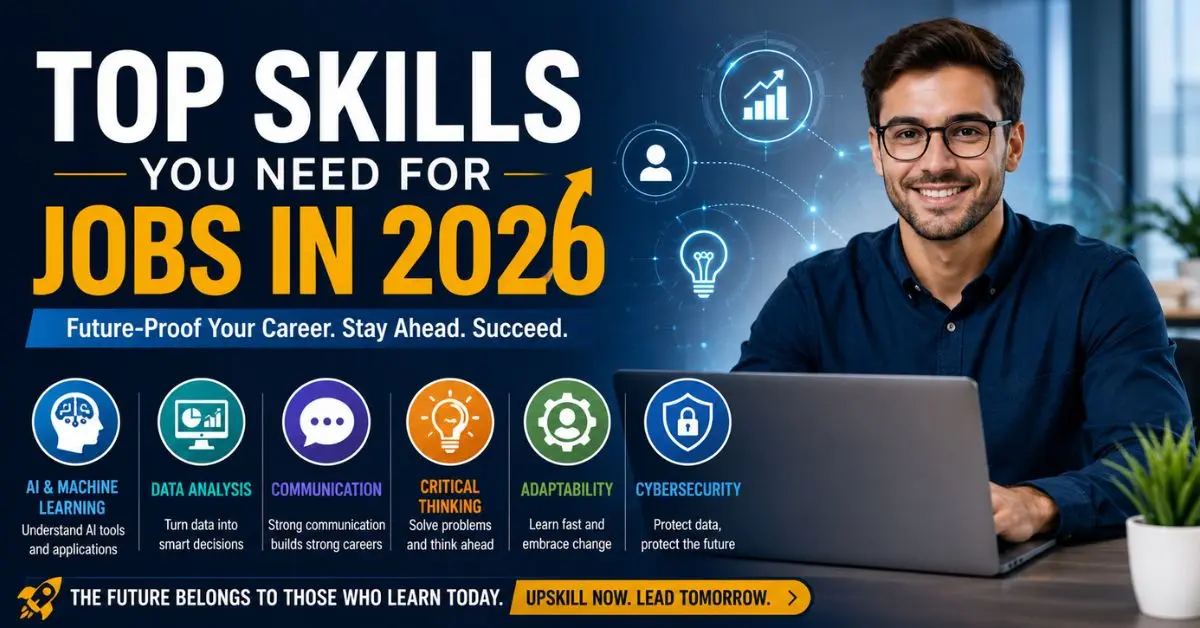
Introduction
The job market is changing faster than ever before. New technologies, shifting business models, remote work, and evolving customer expectations are transforming the way companies hire employees. As a result, professionals who want to stay competitive must continuously develop new abilities and adapt to workplace changes.
Understanding the Top Skills You Need for Jobs in 2026 is no longer optional. Whether you are a student, recent graduate, job seeker, freelancer, or experienced professional, acquiring future-ready skills can significantly improve your career prospects.
Employers are increasingly looking for candidates who can combine technical expertise with strong human skills. While automation can handle repetitive tasks, organizations still rely on people for creativity, communication, leadership, and problem-solving.
The good news is that many of these skills can be learned through practice, online courses, workplace experience, and self-development. By focusing on the right areas today, you can prepare yourself for emerging opportunities tomorrow.
In this guide, we will explore the most valuable skills expected to dominate the workplace in 2026, why they matter, how to develop them, and the mistakes you should avoid along the way.
What is Top Skills You Need for Jobs in 2026?
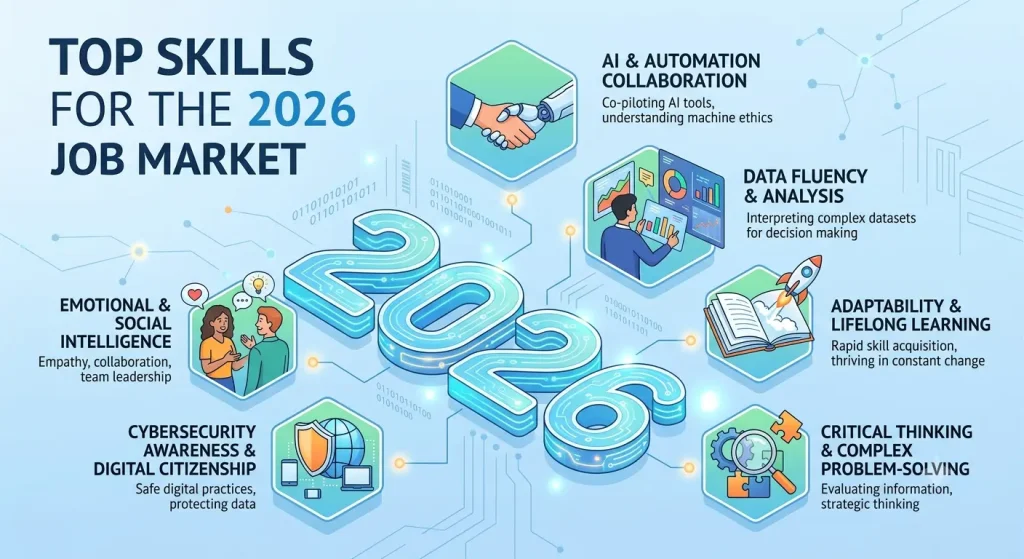
The phrase Top Skills You Need for Jobs in 2026 refers to the abilities, competencies, and knowledge areas that employers will value most in the coming years.
These skills generally fall into two categories:
Technical Skills
Technical skills involve specialized knowledge required to perform specific tasks. Examples include:
- Data analysis
- Digital marketing
- Cloud computing
- Programming
- Cybersecurity
- Project management
Soft Skills
Soft skills focus on interpersonal and personal qualities that help employees work effectively with others.
Examples include:
- Communication
- Leadership
- Emotional intelligence
- Adaptability
- Teamwork
- Critical thinking
Modern employers increasingly seek individuals who possess a combination of both technical and soft skills.
Why is Top Skills You Need for Jobs in 2026 Important?
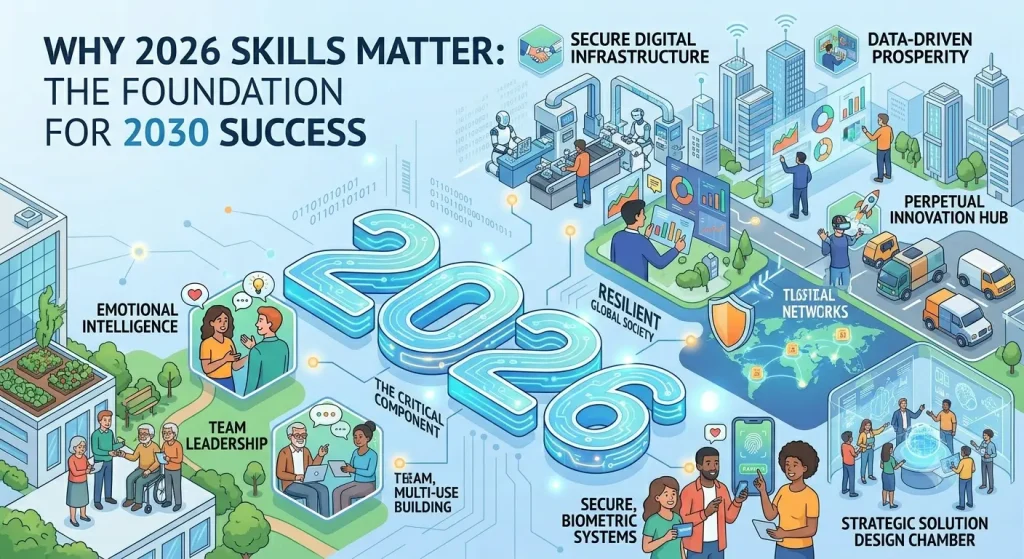
Learning future-focused skills provides numerous advantages in today’s competitive employment landscape.
Increased Employability
Candidates with in-demand skills stand out from the crowd and attract more job opportunities.
Better Salary Potential
Professionals who possess valuable expertise often earn higher salaries because organizations view them as strategic assets.
Career Security
As automation replaces routine tasks, individuals with advanced and adaptable skills remain relevant.
Professional Growth
Learning new abilities opens doors to promotions, leadership positions, and career transitions.
Global Opportunities
Many modern skills are transferable across industries and countries, making international opportunities more accessible.
Detailed Step-by-Step Guide
Step 1: Develop Digital Literacy
Digital literacy is becoming a fundamental requirement across nearly every industry.
Employees should understand:
- Online collaboration tools
- Digital communication platforms
- Basic cybersecurity practices
- Cloud-based software
- Productivity applications
For example, remote teams frequently use project management platforms, video conferencing tools, and shared digital workspaces.
Being comfortable with technology improves productivity and workplace efficiency.
Step 2: Strengthen Data Analysis Skills
Data drives business decisions in nearly every sector.
Organizations collect large amounts of information and need employees who can interpret it effectively.
Learn how to:
- Read reports
- Analyze trends
- Use spreadsheets
- Create visual dashboards
- Draw meaningful conclusions
Even basic analytical abilities can significantly increase your value in the workplace.
Step 3: Improve Critical Thinking
Critical thinking allows professionals to evaluate situations objectively and make informed decisions.
To improve this skill:
- Question assumptions
- Evaluate evidence
- Consider multiple perspectives
- Analyze risks
- Identify solutions
Employers value workers who can solve problems independently rather than relying on constant supervision.
Step 4: Master Communication Skills
Communication remains one of the most sought-after workplace skills.
Strong communicators can:
- Present ideas clearly
Write professional emails
Participate in meetings
Resolve conflicts
Collaborate effectively - Practice both verbal and written communication regularly.
Remember that clear communication often prevents misunderstandings and increases productivity.
Step 5: Build Emotional Intelligence
Emotional intelligence involves understanding and managing emotions effectively.
Key components include:
- Self-awareness
- Self-regulation
- Empathy
- Social skills
- Relationship management
Professionals with high emotional intelligence often excel in leadership and teamwork roles.
Step 6: Learn Adaptability and Flexibility
The future workplace will continue evolving rapidly.
Employees must be prepared to:
- Learn new technologies
- Accept changing responsibilities
- Work in hybrid environments
- Adjust to market shifts
Adaptable professionals are often more resilient during periods of uncertainty.
Step 7: Gain Project Management Skills
Project management skills help individuals organize tasks, meet deadlines, and achieve goals efficiently.
Important areas include:
- Planning
- Scheduling
- Budgeting
- Risk management
- Team coordination
Even non-managers benefit from understanding project management principles.
Step 8: Develop Leadership Abilities
Leadership is no longer limited to management positions.
Modern organizations seek employees who can:
- Take initiative
- Influence others positively
- Support team success
- Make decisions
- Drive innovation
Leadership skills can significantly accelerate career growth.
Step 9: Understand Artificial Intelligence Tools
Artificial intelligence is becoming integrated into many workplace processes.
Professionals should understand:
- AI-assisted workflows
- Automation tools
- Productivity applications
- Ethical considerations
- Human-AI collaboration
Understanding how to use these tools effectively can increase efficiency and competitiveness.
Step 10: Strengthen Creativity and Innovation
Creativity remains one of the few abilities that machines cannot fully replicate.
Creative professionals contribute by:
- Generating ideas
- Improving processes
- Solving complex problems
- Developing innovative products
- Enhancing customer experiences
Organizations increasingly reward employees who think outside the box.
Benefits of Top Skills You Need for Jobs in 2026
Developing future-ready skills offers numerous advantages:
- Improved job opportunities
- Greater career stability
- Increased earning potential
- Better workplace performance
- Enhanced confidence
- Stronger professional reputation
- Increased promotion opportunities
- Greater adaptability to change
- Access to global career options
- Improved leadership potential
- Higher productivity levels
- Long-term career sustainability
Disadvantages / Risks
Although learning new skills is beneficial, there are some challenges to consider:
- Requires time and dedication
- Continuous learning can feel overwhelming
- Some skills may become outdated quickly
- Training programs may involve costs
- Balancing work and learning can be difficult
- Information overload may slow progress
- Lack of practical application can limit results
Understanding these challenges helps learners create realistic development plans.
Common Mistakes to Avoid
Many professionals make avoidable mistakes while preparing for future careers.
Ignoring Soft Skills
Some people focus only on technical abilities while neglecting communication and teamwork.
Learning Too Many Skills at Once
Trying to master everything simultaneously often leads to burnout.
Focus on a few high-impact skills first.
Avoiding Practical Experience
Knowledge without application provides limited value.
Seek internships, projects, freelance work, or volunteer opportunities.
Resisting Change
The workplace continues evolving rapidly.
Professionals who refuse to adapt may struggle to remain competitive.
Neglecting Networking
Building professional relationships can create opportunities that skills alone cannot provide.
Failing to Update Skills Regularly
Continuous learning is essential.
Set aside time each month for skill development
What are the most important skills for jobs in 2026?
The most important skills include digital literacy, communication, adaptability, critical thinking, emotional intelligence, leadership, data analysis, creativity, project management, and technology proficiency.
Why are soft skills becoming more valuable?
Soft skills enable effective collaboration, leadership, communication, and problem-solving. As automation handles routine tasks, human-centered abilities become increasingly important.
Do I need technical skills even in non-technical jobs?
Yes. Most modern workplaces rely on technology. Basic digital literacy and familiarity with workplace software are valuable in nearly every profession.
How can students prepare for jobs in 2026?
Students can develop future-ready skills through online courses, internships, volunteer work, certifications, personal projects, and continuous learning.
Which skill is hardest to automate?
Creativity, emotional intelligence, leadership, strategic thinking, and complex problem-solving remain difficult to automate because they require human judgment and empathy.
How long does it take to learn new professional skills?
The timeline varies depending on the skill and level of expertise required. Basic proficiency may take weeks or months, while mastery often requires years of consistent practice.
Are certifications necessary for career success?
Certifications can strengthen your resume and demonstrate expertise, but practical experience and proven results are often equally important.
Can older professionals still learn future-ready skills?
bsolutely. Continuous learning is valuable at every stage of a career. Many experienced professionals successfully adapt to new technologies and workplace demands.
Expert Tips & Bonus Points
If you want to stay ahead in the future job market, consider the following expert recommendations:
Create a Personal Learning Plan
Identify the skills most relevant to your career goals and develop a structured learning roadmap.
Practice Daily
Consistency matters more than intensity.
Even 30 minutes of focused learning each day can produce significant results over time.
Build a Portfolio
Showcase your abilities through projects, case studies, certifications, and achievements.
Follow Industry Trends
Stay informed about technological developments and market changes within your field.
Develop a Growth Mindset
View challenges as opportunities to learn rather than obstacles to avoid.
Invest in Networking
Attend industry events, webinars, workshops, and professional communities.
Focus on Lifelong Learning
The most successful professionals understand that learning never truly ends.
Conclusion
The future of work will reward individuals who embrace continuous learning and develop a balanced combination of technical expertise and human-centered skills. Understanding the Top Skills You Need for Jobs in 2026 can help you prepare for emerging opportunities while protecting your long-term career prospects.
As industries evolve, employers will increasingly prioritize professionals who can adapt quickly, solve problems creatively, communicate effectively, and leverage technology responsibly. Skills such as digital literacy, data analysis, leadership, emotional intelligence, adaptability, and project management will continue growing in importance across multiple sectors.
The journey toward professional success does not require mastering every skill immediately. Instead, focus on identifying the abilities most relevant to your goals and build them consistently over time. Small daily improvements can lead to remarkable long-term results.
Remember that the most valuable employees are not necessarily those who know everything, but those who remain curious, flexible, and committed to growth. By investing in your development today, you can position yourself for success in tomorrow’s competitive job market.
Whether you are a student entering the workforce, a professional seeking advancement, or someone considering a career change, now is the perfect time to start building the skills that will define success in 2026 and beyond.
