



Introduction
Choosing the right career is one of the most important decisions in life. Many students feel confused after completing Matric, Intermediate, or Graduation because they are unsure about which path to follow. Some students want to continue their education, while others prefer to start earning as soon as possible. The good news is that there are numerous career options after Matric, Inter and Graduation that can help students build a successful future.
Today’s job market is changing rapidly. Traditional careers still offer excellent opportunities, but modern fields such as digital marketing, freelancing, software development, content creation, and e-commerce have also become popular. As a result, students now have more choices than ever before.
However, selecting the right career requires careful planning. It is important to understand your interests, strengths, educational background, and long-term goals before making a decision. A career that suits one person may not be suitable for another.
This comprehensive guide explains the best career options after Matric, Inter and Graduation. It also covers the importance of career planning, step-by-step guidance, benefits, risks, common mistakes, frequently asked questions, and expert tips. Whether you are a student, a parent, or someone seeking career guidance, this article will help you make informed decisions and move confidently toward a brighter future.
Why is Career Options After Matric, Inter and Graduation Important?
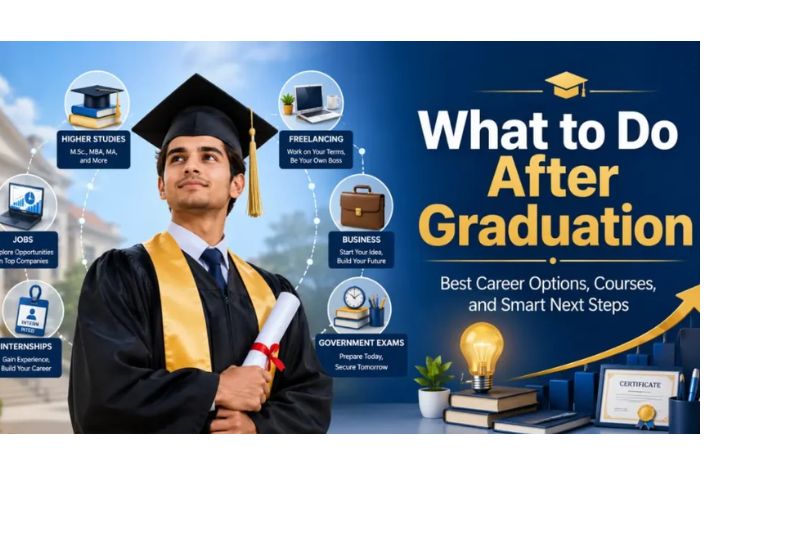
Exploring career options after Matric, Inter and Graduation is important because it prevents you from making blind decisions based purely on peer pressure or parental expectations.
First, proper awareness helps you align your natural talents with the right industry. Many students choose fields they dislike simply because they are unaware of alternative options. Second, understanding the job market ensures that you invest your time, money, and energy into fields that offer high employment rates.
Additionally, knowing your options early allows you to build relevant skills ahead of time. In a competitive world, the difference between a successful professional and an unemployed graduate often comes down to early career planning and strategic decision-making.
Detailed Step-by-Step Guide
Phase 1: Career Pathways After Matric
Completing your Matriculation is your first step into mature academic life. At this point, you have three primary pathways to choose from.
- Intermediate Streams (The Traditional Route)
The most common path is enrolling in a two-year higher secondary school certificate program.
- Pre-Medical:Ideal for those aiming for medicine, dentistry, physiotherapy, or nursing.
- Pre-Engineering:The standard choice for students wanting to pursue mechanical, civil, electrical, or software engineering.
- ICS (Intermediate in Computer Science): Perfect for tech enthusiasts aiming for software development, IT management, or cybersecurity.
- I.Com (Intermediate in Commerce): Tailored for students interested in banking, accounting, finance, and business administration.
- FA (Faculty of Arts):Excellent for creative minds interested in literature, law, psychology, fine arts, or media studies.
- Diplomas in Associate Engineering (DAE)
If you prefer practical, hands-on work over theoretical study, a three-year DAE program is an exceptional alternative. These diplomas are highly respected in industrial sectors and offer quick entry into the workforce. Common specializations include Electrical Technology, Mechanical Technology, Civil Technology, and Chemical Technology.
- Short-Term Vocational and Technical Skills
For students who want to start earning immediately due to financial constraints, short technical courses provide a viable path. You can look into certifications for graphic design, mobile repairing, HVAC repair, electrical wiring, or basic IT support.
Phase 2: Career Pathways After Intermediate
Your choices after Intermediate will heavily dictate your university life and early professional opportunities.
Higher Education (Bachelor’s Degrees)
This is the standard four-year university route. Your options depend largely on your Inter stream:
From Pre-Medical: You can pursue an MBBS, BDS, Doctor of Pharmacy (Pharm-D), Doctor of Physical Therapy (DPT), or a BS in Biotechnology, Microbiology, or Nursing.
From Pre-Engineering & ICS: You can apply for a BS in Computer Science, Software Engineering, Data Science, Artificial Intelligence, or traditional engineering degrees.
From I.Com & Arts: You can enter a Bachelor of Business Administration (BBA), BS Economics, BS Accounting & Finance, Bachelor of Laws (LLB), or a BS in English, Psychology, or Mass Communication.
Professional Certifications
Instead of or alongside a degree, you can pursue globally recognized professional certifications. In the financial sector, programs like ACCA, CA, or CMA are highly prestigious. In the IT sector, certifications from Cisco, Microsoft, or AWS can launch a career faster than a traditional degree.
Direct Entry into the Workforce
If you decide to skip higher education, entry-level jobs in sales, customer support, data entry, and digital freelancing (like content writing, SEO, or virtual assistance) are accessible with a strong command of the English language and basic computer literacy.
Phase 3:Career Pathways After Graduation
Graduation is the ultimate milestone where academic preparation meets real-world execution.
Corporate and Institutional Employment
Most graduates aim for structured corporate roles. Depending on your specialization, you can target multinational companies, local firms, or banks. Key fields include Human Resources, Corporate Finance, Supply Chain Management, Software Development, and Operations Management.
Competitive Government Exams
For long-term job security and high societal status, many graduates opt for civil service exams. Passing these exams grants entry into elite bureaucratic positions, law enforcement management, foreign services, and district administration.
Postgraduate Studies
If you are drawn to research, academia, or high-level corporate leadership, pursuing a Master’s degree (MS/MPhil) or an MBA is the logical next step. This path is crucial if you intend to become a university professor, a lead researcher, or a specialized corporate consultant.
Entrepreneurship and Freelancing
Armed with a degree and a solid skill set, you can establish your own business or agency. Whether it is launching a tech startup, running an e-commerce store, or offering high-ticket consulting services on global freelance platforms, this path offers maximum independence and earning potential.
Benefits of Navigating Career Options Properly
- Long-Term Job Satisfaction:Aligning your career choices with your natural strengths ensures that you remain motivated and happy in your daily work life.
- Higher Earning Potential:Choosing high-demand industries guarantees that your financial compensation scales rapidly as you gain experience.
- Time and Resource Efficiency:Early planning saves you from wasting years and tuition money on degrees that do not yield a return on investment.
- Clear Professional Direction:Having a concrete plan eliminates the anxiety and stress associated with career ambiguity and unemployment.
- Global Mobility:Selecting fields with international demand, such as IT, nursing, or finance, opens up opportunities for working and living abroad.
Disadvantages and Risks of Poor Career Planning
- The Trap of Underemployment:Graduating from a saturated field often forces you to accept low-paying jobs that do not match your educational level.
- Severe Academic Burnout:Forcing yourself into a difficult field, like medicine or engineering, purely due to parental pressure can lead to mental exhaustion and academic failure.
- Wasted Financial Investment:Spending substantial amounts on expensive university degrees that offer zero market value can lead to severe financial distress.
- Skill Obsolescence:Choosing traditional fields without updating your digital skills can leave you redundant in a rapidly modernizing job market.
- Career Stagnation:Without a clear roadmap, you risk staying in dead-end entry-level roles for years without seeing any meaningful promotions.
Common Mistakes to Avoid
One of the most frequent errors students make is following trends blindly. Just because your neighbor succeeded in computer science does not mean it is the right choice for you. Always evaluate your personal aptitude before jumping into a popular field.
Another major mistake is ignoring digital skills. In today’s economy, a finance graduate who cannot use data analytics tools, or a marketer who does not understand digital advertising, will struggle to find a job. Skills complement your degree; they never replace the need for practical competence.
Lastly, do not wait until graduation to build your resume. Many students focus solely on getting high grades while ignoring internships, volunteer work, and networking. The corporate world values practical exposure and problem-solving abilities far more than a perfect GPA on a piece of paper.
FAQs
What are the most high-paying career options after Matric?
The most lucrative path immediately after Matric is enrolling in a Diploma of Associate Engineering (DAE) or taking up specialized digital skills like full-stack web development or mobile app creation. These tracks allow you to enter the technical workforce or start freelancing far quicker than traditional academic routes.
Can I change my field after completing Inter in Pre-Medical?
Yes, absolutely. Students who finish Inter Pre-Medical are not restricted to healthcare. You can easily switch to business administration, law, computer science, data science, economics, psychology, and mass communication. Most universities offer smooth transition programs for medical students entering non-medical fields.
Is a simple graduation degree enough to secure a corporate job today?
Generally, a simple academic degree is no longer sufficient. The job market has become exceptionally competitive. To stand out to corporate employers, you must pair your graduation degree with practical internships, industry-specific certifications, and strong soft skills like communication, leadership, and emotional intelligence.
What should I choose between a job and postgraduate studies after graduation?
If you have immediate financial responsibilities or want to understand how your industry operates in the real world, taking a job is highly recommended. Gaining two to three years of work experience before pursuing postgraduate studies makes your advanced education far more meaningful and highly valued by employers.
Are there good career options after Matric for Arts students?
Yes, the Arts stream offers incredible avenues. After Matric Arts, you can pursue an FA and later specialize in fields such as graphic design, fashion design, interior design, law, corporate psychology, journalism, or digital content creation. The creative economy is expanding rapidly worldwide.
How important is freelancing when evaluating career options?
Freelancing is an excellent standalone career or a powerful supplementary income source. It allows you to monetize skills like UI/UX design, SEO, copywriting, and software development directly on global platforms. It offers unmatched flexibility and exposes you to international business standards early in your life.
Expert Tips & Bonus points

To truly excel in your chosen path, you must treat your education as a foundation rather than a final destination. The modern employer looks for dynamic individuals who display a commitment to lifelong learning.
- Build an Online Presence: Create a professional LinkedIn profile early in your academic journey. Share your learnings, connect with industry experts, and look for mentorship opportunities.
- Learn a High-Income Digital Skill: Regardless of whether you study history, chemistry, or accounting, learn a digital skill. Understanding data analysis, digital marketing, or basic coding will make you vastly more employable.
- Prioritize Internships: Do not spend your university summer breaks resting. Secure internships, even if they are unpaid. The hands-on experience and professional connections you build will pay off massively when you graduate.
- Focus on Soft Skills: Your technical knowledge might get you a job interview, but your communication skills, teamwork, and problem-solving attitude will get you hired and promoted.
Conclusion
Navigating the various career options after Matric, Inter and Graduation can certainly feel overwhelming, but it is entirely manageable when you break it down step by step. Each educational milestone provides a unique opportunity to reassess your goals, look at market trends, and pivot toward a more fulfilling path. Remember that your career is a marathon, not a sprint. The choices you make today will form the stepping stones for your future milestones.
Take the time to research, speak with industry experts, and evaluate your own strengths honestly. Do not let fear or societal pressure dictate your professional life. By combining academic credentials with modern practical skills, a proactive attitude, and a commitment to continuous self-improvement, you can easily secure a stable, lucrative, and deeply rewarding career that stands the test of time.
