



Introduction
Learning how to stay focused during study sessions is one of the most valuable skills students can develop. Whether you are preparing for an important exam, working on a college assignment, or learning a new subject, your ability to concentrate directly affects your results.
Many students begin studying with good intentions but quickly become distracted. Notifications, social media, background noise, and wandering thoughts can make it difficult to maintain attention for long periods. As a result, study time becomes less productive, and tasks take much longer than necessary.
The good news is that focus is not a talent that only a few people possess. It is a skill that can be developed through consistent habits, proper planning, and effective study techniques. By making small adjustments to your environment and daily routine, you can significantly improve your concentration and learning efficiency.
In this guide, you will discover how to stay focused during study sessions using practical and realistic methods. From setting clear goals to managing distractions and maintaining mental energy, these strategies are suitable for beginners and intermediate learners alike. By applying these techniques consistently, you can make your study sessions more productive, less stressful, and far more rewardin
How to stay focused during study sessions refers to the process of maintaining attention and concentration on academic tasks without being distracted by internal or external factors.
Focus involves directing your mental energy toward a specific objective. During studying, this means actively engaging with learning materials, understanding concepts, solving problems, and retaining information.
Being focused does not mean studying for hours without breaks. Instead, it means using your study time efficiently and remaining engaged with the task at hand.
- Examples of focused study behavior include:
- Reading without checking your phone every few minutes
Taking organized notes
Completing study goals within a set timeframe
Actively reviewing information
Avoiding unnecessary multitasking
When students understand how concentration works, they become better equipped to create productive learning habits.
Why is How to Stay Focused During Study Sessions Important?
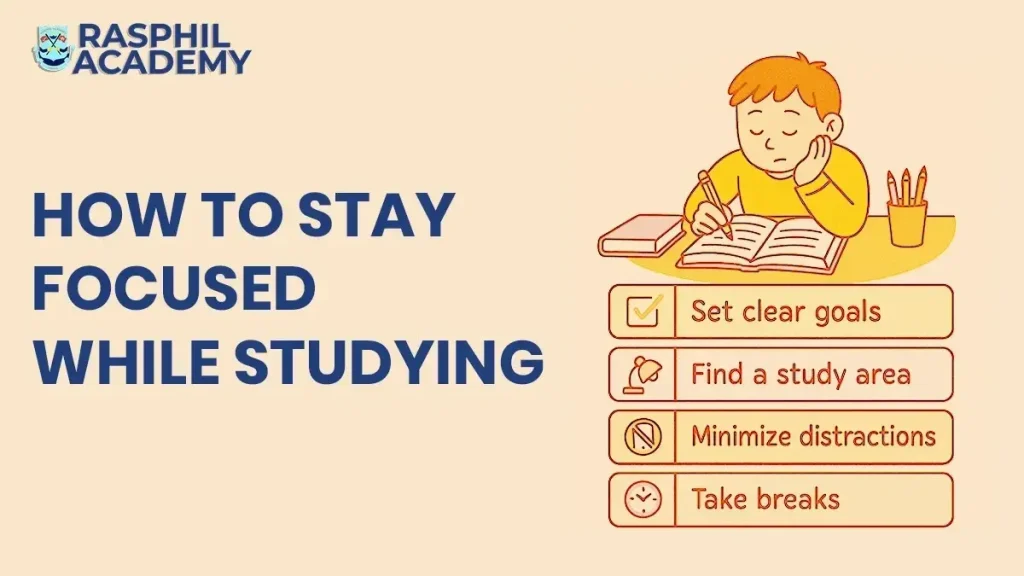
Focus is the foundation of effective learning. Without concentration, even long study sessions can produce poor results.
Here are several reasons why focus matters:
Improves Information Retention
Concentrated study allows the brain to process and store information more effectively. This makes recalling information easier during exams and assignments.
Saves Time
Students who remain focused often complete tasks faster because they spend less time switching between distractions.
Reduces Stress
When studying becomes more efficient, deadlines feel more manageable, reducing anxiety and academic pressure.
Enhances Understanding
Focused attention helps learners understand concepts more deeply rather than simply memorizing facts.
Builds Self-Discipline
Developing concentration strengthens personal discipline, which benefits many areas of life beyond academics.
Detailed Step-by-Step Guide
Step 1: Set Clear Study Goals
Before starting, decide exactly what you want to accomplish.
Instead of saying, “I will study biology,” try setting a specific objective such as:
- Complete Chapter 5 notes
- Solve 20 practice questions
- Review cell division concepts
Clear goals provide direction and make progress measurable.
Step 2: Create a Dedicated Study Space
Your environment significantly affects concentration.
Choose a location that is:
- Quiet
- Comfortable
- Well-lit
- Organized
- Free from unnecessary distractions
For example, a clean desk with only essential study materials often promotes better focus than studying on a bed or couch.
Step 3: Remove Digital Distractions
Technology is one of the biggest barriers to concentration.
Consider these strategies:
- Turn off notifications.
- Put your phone on silent mode.
- Use website blockers if necessary.
- Close unrelated browser tabs.
- Keep only required applications open.
Even brief interruptions can break concentration and reduce productivity.
Step 4: Use the Pomodoro Technique
The Pomodoro Technique is a popular time-management method.
A typical cycle includes:
- Study for 25 minutes.
- Take a 5-minute break.
- Repeat four times.
- Take a longer break of 15–30 minutes.
This approach helps maintain mental energy while preventing burnout.
Step 5: Prioritize Difficult Subjects First
Mental energy is usually highest at the beginning of a study session.
Therefore, tackle challenging topics before moving on to easier tasks.
For example:
- Mathematics before reviewing vocabulary
- Physics before organizing notes
- Research writing before formatting documents
This strategy ensures important work receives your best attention.
Step 6: Practice Active Learning
Passive reading often leads to poor retention.
Instead, actively engage with the material by:
- Taking notes
- Summarizing information
- Teaching concepts to someone else
- Creating flashcards
- Solving practice questions
Active learning keeps the brain involved and improves understanding.
Step 7: Take Effective Breaks
Breaks are essential for maintaining concentration.
However, not all breaks are equally beneficial.
Good break activities include:
- Stretching
- Walking
- Drinking water
- Deep breathing
- Looking away from screens
Avoid activities that may extend longer than planned, such as scrolling through social media.
Step 8: Stay Hydrated and Eat Well
Nutrition plays an important role in cognitive performance.
Helpful study snacks include:
- Fruits
- Nuts
- Yogurt
- Whole grains
- Healthy sandwiches
Drinking enough water also supports concentration and mental clarity.
Step 9: Get Enough Sleep
- Sleep directly affects memory, focus, and learning ability.
- Most students perform better when they maintain consistent sleep schedules.
- Aim for quality sleep each night rather than relying on late-night cramming sessions.
Step 10: Track Your Progress
Monitoring progress creates motivation and accountability.
You can track:
- Study hours
- Completed chapters
- Practice test scores
- Weekly goals
Seeing improvement over time encourages consistency and confidence.
Benefits of How to Stay Focused During Study Sessions

Developing strong focus skills offers many advantages:
- Improves academic performance
- Increases productivity
- Enhances memory retention
- Reduces procrastination
- Saves valuable time
- Strengthens self-discipline
- Improves confidence
- Supports long-term learning
- Reduces exam stress
- Encourages better study habits
- Makes learning more enjoyable
- Helps achieve educational goals faster
These benefits often extend beyond academics and contribute to personal growth.
Disadvantages / Risks
Although focus is beneficial, some challenges may arise when trying to improve concentration.
- Overworking without breaks may cause fatigue.
- Unrealistic expectations can lead to frustration.
- Excessive perfectionism may reduce efficiency.
- Ignoring physical health can decrease focus.
- Studying for long periods without movement may cause discomfort.
- Poor time management may create unnecessary stress.
- Overdependence on productivity methods may reduce flexibility.
Recognizing these risks helps students create a balanced approach.
Common Mistakes to Avoid
Many learners unintentionally sabotage their concentration.
Multitasking
Attempting to perform multiple tasks simultaneously often reduces efficiency and increases errors.
Studying Without a Plan
Lack of structure can lead to wasted time and confusion.
Ignoring Breaks
Continuous studying may seem productive, but mental fatigue eventually reduces performance.
Using a Distracting Environment
Noisy surroundings can significantly interfere with concentration.
Setting Unrealistic Goals
Goals that are too ambitious may create discouragement and reduce motivation.
Constantly Checking Devices
Frequent phone use interrupts attention and makes it difficult to regain focus.
Comparing Yourself to Others
Everyone learns differently. Focus on personal progress rather than comparison.
FAQs
Can music help me stay focused?
How long should a study session be?
The ideal length varies from person to person. Many students find 25 to 50 minutes of focused study followed by a short break highly effective. Experiment to discover what works best for you.
Why do I lose focus so quickly while studying?
Loss of focus may result from fatigue, stress, poor sleep, distractions, lack of interest, or an unsuitable study environment. Identifying the cause is the first step toward improvement.
Can music help me stay focused?
For some students, instrumental or low-volume background music improves concentration. Others perform better in complete silence. Test different approaches and evaluate your results.
Is studying for many hours better than studying efficiently?
Not necessarily. Quality often matters more than quantity. Focused study sessions are generally more productive than spending long hours studying without concentration.
How can I avoid procrastination?
Break large tasks into smaller steps, create deadlines, and start with a simple action. Beginning is often the hardest part, and momentum usually follows once work starts.
Does exercise improve concentration?
Yes. Regular physical activity increases blood flow to the brain, supports mental health, and often improves focus and cognitive performance.
Can sleep affect study performance?
Absolutely. Adequate sleep improves memory, concentration, decision-making, and learning efficiency. Consistent sleep habits are essential for academic success.
Expert Tips & Bonus Points
Students who consistently perform well often share similar habits.
Consider implementing these expert recommendations:
Use a Daily Study Schedule
Planning study sessions in advance reduces decision fatigue and creates consistency.
Start with Small Wins
Complete an easy task first to build momentum and motivation.
Practice Mindfulness
Short mindfulness exercises can improve attention control and mental clarity.
Review Instead of Rereading
Testing yourself is usually more effective than repeatedly reading the same material.
Maintain a Positive Mindset
Believing that focus can improve through practice encourages persistence and growth.
Reward Yourself
Small rewards after completing study goals can strengthen motivation.
Examples include:
- Watching a favorite show
- Enjoying a snack
- Taking a relaxing walk
- Spending time with friends
Use Visual Planning Tools
Calendars, planners, and checklists help organize tasks and monitor progress.
Study Consistently
Short daily sessions are often more effective than occasional marathon study sessions.
Conclusion
Learning how to stay focused during study sessions is a valuable skill that can transform your academic performance and overall productivity. While distractions are a common challenge in today’s fast-paced world, they can be managed through intentional habits and practical strategies.
Creating a suitable study environment, setting clear goals, eliminating distractions, and using proven techniques such as active learning and structured study intervals can dramatically improve concentration. At the same time, maintaining healthy habits such as proper sleep, regular exercise, and balanced nutrition supports long-term mental performance.
It is important to remember that focus is not something that develops overnight. Like any skill, it requires patience, practice, and consistency. Some days will be easier than others, but steady effort leads to lasting improvement.
By applying the strategies outlined in this guide, students can gain greater control over their attention, learn more effectively, and achieve their academic goals with less stress. Whether you are a beginner looking to improve study habits or an intermediate learner seeking better productivity, developing stronger focus can make every study session more meaningful and successful.
