



Introduction
Confidence influences almost every part of life. It affects how you speak, make decisions, build relationships, and pursue opportunities. People who appear confident are not necessarily fearless or perfect. In most cases, they have learned how to trust themselves despite uncertainty.
That is why Confidence Building Tips for Everyday Life are important for anyone who wants to grow personally and professionally. Confidence is not something that only a lucky few possess. It is a skill that can be developed through consistent habits and positive actions.
Many people struggle with self-doubt. They hesitate to speak up in meetings, avoid social situations, or delay important decisions because they fear failure. Fortunately, confidence can be strengthened over time through practice and self-awareness.
Interestingly, confidence also affects learning. Students looking for how to build confidence in everyday life often discover that confidence improves focus, productivity, and academic performance. Some even notice benefits when applying techniques similar to self confidence tips and study strategies.
This guide explores practical methods to help you develop stronger confidence every day. Whether you want to communicate better, perform well at work, improve relationships, or simply feel more comfortable with yourself, these strategies can help you create lasting positive change.
What is Confidence Building Tips for Everyday Life?
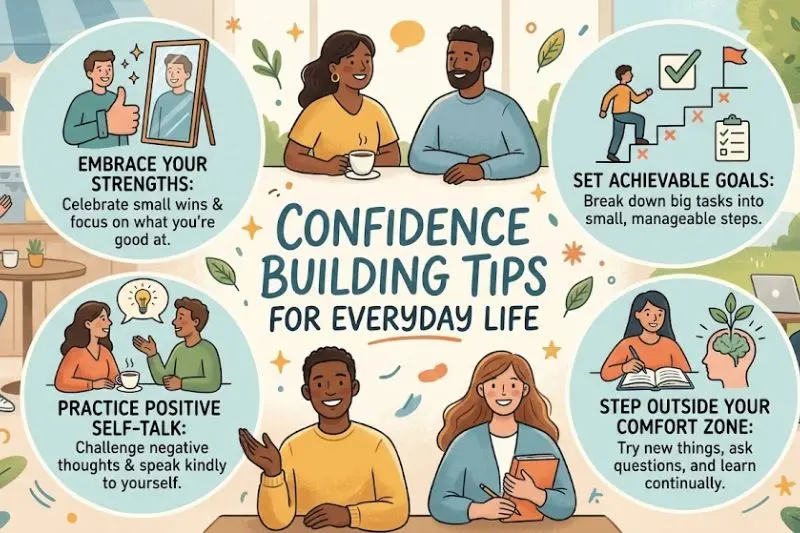
Confidence Building Tips for Everyday Life refers to practical habits, strategies, and mindset shifts that help people develop stronger self-belief and trust in their abilities.
Confidence does not mean thinking you are better than everyone else. Instead, it means believing that you can handle challenges, learn from mistakes, and continue moving forward even when things become difficult.
These confidence-building practices may include setting goals, improving communication skills, maintaining positive self-talk, learning new skills, and stepping outside your comfort zone.
Confidence grows gradually. Every positive action reinforces the belief that you are capable of handling life’s challenges.
Why is Confidence Building Tips for Everyday Life Important?
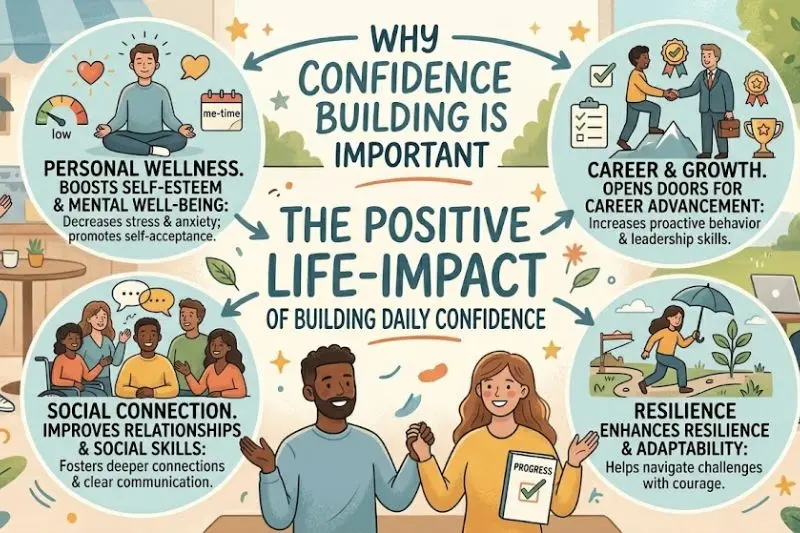
Confidence affects almost every area of life.
People with healthy confidence often make decisions more easily, communicate clearly, and pursue opportunities they might otherwise avoid.
Here are several reasons confidence matters:
- Improves decision-making
- Reduces fear of failure
- Enhances communication skills
- Strengthens relationships
- Increases motivation
- Supports career growth
- Encourages personal development
- Improves mental well-being
Confidence also helps people recover from setbacks more effectively. Instead of viewing failure as proof of weakness, confident individuals see it as a learning experience.
This mindset creates long-term growth and resilience.
Detailed Step-by-Step Guide
Step 1: Identify Your Strengths
Many people focus only on weaknesses.
Instead, make a list of your strengths, talents, achievements, and positive qualities.
For example:
- Good communication skills
- Strong work ethic
- Creativity
- Problem-solving ability
- Kindness toward others
Recognizing your strengths helps build a more balanced self-image.
Step 2: Set Small Achievable Goals
Confidence grows through accomplishment.
Start with simple goals that you can realistically achieve.
Examples include:
- Reading ten pages daily
- Exercising three times per week
- Speaking during a meeting
- Learning one new skill each month
Each achievement strengthens your belief in yourself.
Step 3: Improve Your Self-Talk
The way you speak to yourself matters.
Negative thoughts such as “I can’t do this” or “I always fail” damage confidence.
Replace them with more balanced statements:
- “I can learn this.”
- “I will improve with practice.”
- “Mistakes help me grow.”
Positive self-talk encourages action and resilience.
Step 4: Take Care of Your Appearance
You do not need expensive clothes or perfect looks to feel confident.
Simple habits such as:
- Maintaining personal hygiene
- Dressing neatly
- Standing upright
- Smiling more often
can improve how you feel about yourself.
Step 5: Learn New Skills
Skill development naturally increases confidence.
When you become competent in an area, your belief in your abilities grows.
Consider learning:
- Public speaking
- Writing
- Technology skills
- Languages
- Leadership skills
Knowledge creates confidence.
Step 6: Leave Your Comfort Zone
Growth rarely happens inside your comfort zone.
Challenge yourself regularly by trying something slightly uncomfortable.
Examples include:
- Introducing yourself to new people
- Asking questions in class
- Giving presentations
- Joining community activities
Small challenges create lasting confidence.
Step 7: Focus on Progress, Not Perfection
Perfectionism often destroys confidence.
Nobody succeeds perfectly every time.
Instead of aiming for perfection, focus on continuous improvement.
Progress builds confidence because it proves that growth is possible.
Step 8: Develop Healthy Habits
Physical and mental health influence confidence.
Useful habits include:
- Regular exercise
- Healthy eating
- Proper sleep
- Staying hydrated
- Stress management
When you feel physically strong, mental confidence often improves as well.
Step 9: Surround Yourself with Positive People
The people around you influence your mindset.
Spend more time with individuals who encourage growth and positivity.
Reduce exposure to people who constantly criticize or discourage you.
Supportive relationships strengthen self-belief.
Step 10: Accept Failure as Part of Growth
Failure is not the opposite of success.
It is part of the learning process.
Every successful person has experienced setbacks.
Instead of asking, “Why did I fail?” ask, “What can I learn from this experience?”
Step 11: Improve Communication Skills
Confidence often becomes visible through communication.
Practice:
- Maintaining eye contact
- Speaking clearly
- Listening actively
- Expressing opinions respectfully
Strong communication skills increase confidence in both social and professional situations.
Step 12: Celebrate Small Wins
Many people overlook their achievements.
Take time to acknowledge progress.
Even small successes deserve recognition because they reinforce positive behavior and confidence.
Benefits of Confidence Building Tips for Everyday Life
Using confidence-building strategies can provide many advantages:
- Greater self-belief
- Improved communication
- Better decision-making
- Increased motivation
- Stronger relationships
- Reduced anxiety
- Better leadership skills
- Improved career opportunities
- Higher productivity
- Greater resilience
- Improved social interactions
- Better emotional well-being
These benefits often create a positive cycle where confidence leads to success, and success further strengthens confidence.
Disadvantages / Risks
Although confidence is beneficial, there can be potential risks if misunderstood.
- Overconfidence may lead to poor decisions
- Ignoring feedback can limit growth
- Unrealistic expectations may cause disappointment
- Comparing yourself to others can create frustration
- Excessive focus on confidence may overlook skill development
Healthy confidence requires balance and self-awareness.
Common Mistakes to Avoid
Comparing Yourself to Others
Constant comparison damages self-esteem.
Everyone has different experiences, strengths, and challenges.
Focus on your own progress instead.
Seeking Constant Approval
Confidence should come from within.
Relying entirely on others for validation creates emotional dependence.
Avoiding Challenges
Growth requires discomfort.
Avoiding difficult situations limits confidence development.
Negative Self-Talk
Harsh self-criticism weakens self-belief.
Practice speaking to yourself with kindness and realism.
Expecting Instant Results
Confidence develops gradually.
Expecting immediate transformation often leads to frustration.
Ignoring Personal Growth
Confidence grows alongside skills, knowledge, and experience.
Continue learning and improving regularly.
FAQs
What is the fastest way to build confidence?
The fastest way is to take small actions consistently. Achieving manageable goals creates positive momentum and gradually strengthens self-belief.
Can confidence be learned?
Yes. Confidence is a skill that develops through practice, experience, and positive habits.
Why do some people lack confidence?
Common causes include negative experiences, fear of failure, criticism, comparison with others, and low self-esteem.
How can I become more confident socially?
Practice communication skills, engage in conversations regularly, maintain eye contact, and focus on listening rather than worrying about judgment.
Does exercise improve confidence?
Yes. Physical activity improves mood, energy levels, and self-image, all of which contribute to greater confidence.
Expert Tips & Bonus Points
Keep a Success Journal
- Write down daily achievements, no matter how small.
- Reviewing accomplishments reminds you of your progress and capabilities.
- Use Positive Body Language
- Stand tall, maintain good posture, and make eye contact.
- Your body language influences both how others see you and how you see yourself.
- Practice Gratitude
- Focusing on what is going well creates a healthier mindset.
- Gratitude reduces negativity and supports confidence.
- Learn from Confident People
- Observe how confident individuals communicate, solve problems, and handle challenges.
- Use their behaviors as inspiration rather than comparison.
- Limit Negative Influences
- Reduce exposure to excessive negativity, whether from social media, news, or toxic relationships.
- Protecting your mindset supports confidence growth.
Take Consistent Action
Action is one of the strongest confidence builders.
Every time you face a challenge and move forward, you prove to yourself that you are capable.
Conclusion
Developing confidence is one of the most valuable investments you can make in yourself. The Confidence Building Tips for Everyday Life discussed in this guide are practical, realistic, and effective for people at different stages of personal growth. Confidence does not require perfection, exceptional talent, or constant success. It requires consistent effort and a willingness to learn.
Many people spend years waiting to feel confident before taking action. In reality, confidence often comes after action. Each small achievement, successful conversation, completed task, or personal challenge contributes to stronger self-belief. Over time, these experiences create a foundation of trust in your own abilities.
Learning how to build confidence in everyday life involves developing healthy habits, improving self-talk, setting realistic goals, and embracing opportunities for growth. While setbacks may occur, they should be viewed as lessons rather than failures. Every challenge provides an opportunity to become stronger and more capable.
The most effective self confidence tips are often the simplest ones. Focus on progress instead of perfection, celebrate small victories, and continue learning. Confidence is not a destination that you suddenly reach. It is an ongoing process of growth and self-discovery.
By applying these strategies consistently, you can improve your relationships, career opportunities, communication skills, and overall well-being. Most importantly, you can develop a stronger belief in yourself and your ability to handle whatever life brings your way.
